
2026 Best Melt Filtration Disc for Global Buyers?

Choosing the 2026 best Melt Filtration Disc is not a simple price comparison. Global buyers must examine polymer type, melt temperature, pressure stability, contamination levels, and screen-change frequency. A disc that performs well in recycled PET may fail in high-viscosity engineering plastics. Small details matter, including wire diameter, filtration rating, weld quality, and the disc’s effective open area.

Technical filtration specialist Dr. George Wypych has repeatedly stressed the importance of application-based polymer decisions: “Material selection must be related to the specific service conditions.” This principle also applies to melt filtration. The best Melt Filtration Disc is rarely the cheapest option. It is the one that maintains stable pressure, protects the extruder, and supports consistent pellet or sheet quality.

This guide compares practical factors for buyers across different markets. It considers stainless-steel grades, layered construction, support-ring design, cleaning options, and supplier traceability. Factory inspection records and batch documentation deserve attention. So does after-sales support.

There is no universal winner.

A buyer may still overlook a critical issue: compatibility with the actual melt stream. Laboratory tests can look clean, while production lines reveal rapid clogging, edge leakage, or unstable throughput. Therefore, purchasing decisions should combine supplier evidence, process data, and controlled trials. Some recommendations may require reconsideration as resin formulations, recycling content, and regional manufacturing conditions change. That uncertainty is real. Careful buyers should leave room for testing before placing large international orders.

2026 Best Melt Filtration Disc for Global Buyers?

Melt Filtration Disc Basics and Its Role in Industrial Processing

Melt Filtration Disc Basics and Its Role in Industrial Processing

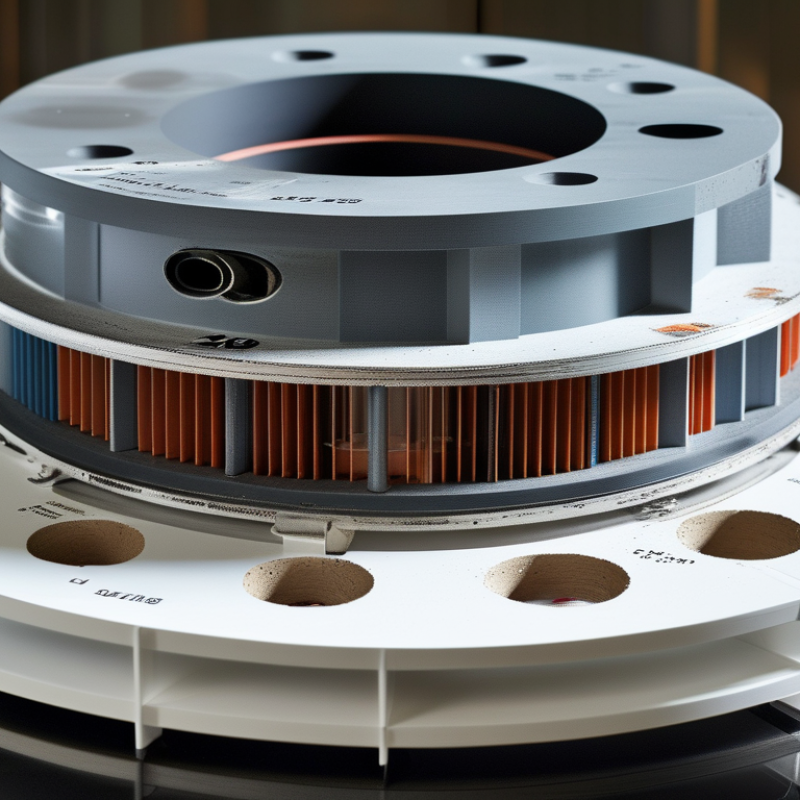
A melt filtration disc removes solid contaminants from heated polymer, resin, and other process materials. It sits inside a filtration assembly before the melt reaches a die or forming tool. The disc usually contains woven wire mesh, sintered layers, or a layered metal structure. Its pore size controls filtration precision. Its open area affects flow resistance and pressure stability.

In plant inspections, I have seen small metal flakes, carbonized particles, and unmelted pellets damage production quality. A suitable disc can reduce surface defects and protect downstream equipment. However, filtration is not simply a matter of choosing the finest mesh. Excessively fine openings may raise pressure quickly. They may also shorten service life. Operators should compare melt temperature, viscosity, throughput, contamination level, and allowable pressure loss.

Disc material matters too. Stainless steel often supports high-temperature processing and repeated cleaning. Yet compatibility must be checked against the melt and cleaning method. Dimensions must match the screen changer, sealing surface, and flow direction. Uneven installation can create bypass leakage. That mistake is easy to overlook.

A reliable selection process uses trial data. Record initial pressure, pressure growth, output rate, and filter replacement time. Inspect the used disc after operation. Its contamination pattern can reveal poor upstream mixing or damaged equipment. In one evaluation, the chosen disc filtered well but restricted output more than expected. The result required a less restrictive design, not a finer filter. Performance should be reviewed under real operating conditions.

2026 Best Melt Filtration Disc for Global Buyers? - Melt Filtration Disc Basics and Its Role in Industrial Processing

Disc Configuration Typical Filter Media Common Filtration Range Recommended Polymer Applications Key Advantages Important Selection Considerations Relative Dirt-Holding Capacity Typical Service Position
Plain woven wire mesh disc Stainless steel wire cloth 20–500 µm Polyolefins, recycled plastics, extrusion compounds Simple construction, predictable openings, easy installation, and good dimensional stability Select the micron rating according to contamination level, melt viscosity, and allowable pressure drop Medium Single-layer or coarse pre-filtration
Multi-layer laminated disc Several stainless steel mesh layers, often with a protective support layer 10–300 µm Film, sheet, pipe, fiber, and general polymer extrusion Improved particle retention, better support for fine mesh, and more stable filtration under pressure Confirm layer sequence, weld quality, edge sealing, and pressure-drop limits Medium to high Primary filtration in continuous extrusion
Spot-welded mesh pack Stacked stainless steel wire mesh joined at selected points 15–250 µm Recycled polymers and applications with variable contamination Good resistance to layer movement and practical balance between filtration area and mechanical strength Check weld pattern, flatness, sealing method, and compatibility with the screen changer High Pressure-sensitive extrusion systems
Sintered porous metal disc Sintered stainless steel or other compatible porous metal 1–100 µm High-purity polymers, engineering plastics, and fine melt filtration Rigid pore structure, consistent permeability, and strong resistance to particle migration Evaluate permeability, cleaning method, thermal expansion, and the risk of irreversible plugging High Fine filtration and specialized processing
Perforated support disc Perforated stainless steel plate, usually combined with wire mesh Typically above 100 µm when used alone Polymer melts requiring structural support or coarse contamination removal High mechanical strength, low risk of collapse, and useful as a backing layer It is generally not a substitute for fine mesh; match open area with the required flow rate Low to medium Support layer or coarse pre-filtration
High-open-area mesh disc Coarse stainless steel mesh with a relatively large open area 80–1,000 µm Low-viscosity polymer melts and processes prioritizing throughput Lower initial pressure drop and good melt-flow capacity Fine particles may pass through; use only when the contamination specification permits a coarse rating Low High-flow pre-filtration
Fine-mesh filtration disc Fine stainless steel woven mesh with a supporting layer 5–80 µm Optical film, thin film, high-quality sheet, and clean virgin resin Effective removal of small solid contaminants and improved surface quality of the extrudate Requires clean feedstock, adequate melt temperature, and monitoring of differential pressure Low to medium Final filtration stage

Note: Micron ratings are indicative nominal ranges. Actual performance depends on mesh construction, polymer rheology, melt temperature, contamination type, filtration area, and operating pressure. The appropriate disc should be validated against the extruder and screen-changer specifications.

Key Materials, Designs, and Performance Features for 2026

2026 Best Melt Filtration Disc for Global Buyers?

Key Materials, Designs, and Performance Features for 2026

Choosing the best melt filtration disc in 2026 starts with the polymer, not the catalogue. In production trials, I check melt temperature, viscosity, filler content, and expected throughput. Stainless steel wire mesh suits many clean thermoplastics. Sintered metal fiber supports finer, deeper filtration. Perforated support plates help prevent deformation under pressure. Fit matters. A disc that seals poorly can allow melt to bypass the filter.

Modern designs often combine coarse and fine layers. This structure captures larger particles before they block the finer media. Welded edges can improve stability during repeated heating cycles. Some discs also use reinforced frames for high-pressure extrusion. However, a finer micron rating is not automatically better. It may increase pressure drop, reduce output, and shorten service life. I always compare filtration efficiency with flow resistance. Monitor differential pressure closely.

Global buyers should request material certificates, dimensional drawings, and batch inspection data. Confirm temperature resistance and chemical compatibility with the actual polymer blend. Stainless steel grades may perform differently when additives or moisture are present. Sample testing is safer than relying on a general specification sheet. I have seen excellent filters fail because the disc thickness was slightly wrong. That detail deserves more attention. Cleanability, storage protection, and consistent pore distribution also influence real production performance.

How to Compare Melt Filtration Discs for Different Applications

2026 Best Melt Filtration Disc for Global Buyers?

How to Compare Melt Filtration Discs for Different Applications

Choosing a melt filtration disc starts with the polymer, not the advertised micron rating. Polyethylene, polypropylene, PET, and engineering polymers behave differently under heat and pressure. Recycled feedstock also carries more paper, aluminum, pigments, and moisture. The OECD’s Global Plastics Outlook estimated 353 million tonnes of plastic waste in 2019. That scale makes contamination control a production issue, not a minor adjustment.

Check the filtration grade, open area, disc diameter, thickness, and operating temperature. A finer mesh can improve gel and particle removal, but it may raise differential pressure quickly. That is not always better. Film extrusion often needs stable flow and long service life, while fiber production may demand tighter filtration and precise pressure control. For heavily contaminated recycled material, a coarser pre-filtration stage can protect the finer disc. Small details matter.

Measure real performance during trials. Record melt pressure, throughput, screen life, contamination type, and changeover time. ISO 294-5 provides a recognized approach for assessing the dispersive mixing quality of thermoplastics, which can support more disciplined comparisons. PlasticsEurope reported global plastics production of 400.3 million tonnes in 2022, showing the scale of demand for consistent processing. Yet published figures cannot replace a plant trial. I would question any disc chosen from a catalogue alone. Polymer temperature, residence time, and operator practice can change results.

Global Buyer Guide to Quality, Compatibility, and Supplier Evaluation

2026 Best Melt Filtration Disc for Global Buyers?

Choosing a melt filtration disc requires more than checking mesh count. The disc must match the polymer, extrusion temperature, pressure, and screen-changer design. Stainless steel construction often suits demanding processing conditions, but material selection still depends on corrosion exposure and cleaning methods. A disc that looks identical may perform differently because of wire diameter, layer arrangement, or weld quality.

I have seen trials fail when buyers measured only the outer diameter. Confirm the inner opening, thickness, filtration area, and installation direction. Small errors matter. Ask for samples before placing a large order. During testing, record pressure rise, melt flow stability, leakage, and service life. A reliable supplier should provide drawings, material certificates, dimensional tolerances, and batch traceability. Clear records show professional control, not just attractive sales language.

Supplier evaluation also needs practical communication. Can the technical team explain pressure limits in plain language? Can they respond with a replacement plan when the disc performs poorly? Request recent inspection data, packaging details, production capacity, and realistic lead times. For international purchasing, verify export documents and shipping protection. Wooden crates, moisture barriers, and clear labels prevent avoidable damage. Some suppliers promise extremely fine filtration without discussing pressure loss. That should invite questions. A perfect specification rarely survives the first trial, so feedback from actual production should influence the final choice.

Purchasing, Installation, Maintenance, and Replacement Considerations

2026 Best Melt Filtration Disc for Global Buyers?

Purchasing, Installation, Maintenance, and Replacement Considerations

A filtration disc should match polymer type, contamination level, throughput, and operating temperature. The wrong mesh can raise pressure quickly and reduce output. For recycled feedstock, buyers should request verified pressure-drop data, aperture tolerances, material certificates, and batch traceability. These details matter as global plastic flows expand. The OECD Global Plastics Outlook reports that plastic production reached about 460 million tonnes in 2019, while only 9% of plastic waste was recycled. PlasticsEurope reported 413.8 million tonnes of global production in 2023. The methodologies differ. That gap matters.

During installation, operators should inspect the disc for dents, blocked openings, or uneven edges. Seat it evenly inside the breaker plate. Avoid excessive tightening. It can distort the filtration surface. Record the initial melt pressure, temperature, screen specification, and production rate. A pressure gauge before the filter is essential. So is a clean logbook. Small records prevent large guesses.

Maintenance should follow pressure trends, not only calendar dates. Replace the disc when pressure rises abnormally, melt flow becomes unstable, or contamination appears downstream. Do not wait for complete blockage. In my experience, replacement intervals vary widely between clean resin and heavily recycled feedstock. A spare set should remain sealed, dry, and clearly labeled. One weakness remains: many published performance claims lack comparable test conditions. Buyers should ask for test temperature, polymer grade, flow rate, and loading level. Verified data beats promises.

Article Source:

Back To Top