
10 Best Firefighter Challenge Coins for Departments

Firefighter Challenge Coins are small, but their meaning can extend far beyond their size. They may mark a station milestone, recognize a demanding assignment, or welcome a new team member. The details matter: a readable department emblem, durable metal, and colors that remain clear under everyday handling.

The scale of the fire service helps explain why departments choose different ways to recognize their people. The National Fire Protection Association’s U.S. Fire Department Profile estimated that the United States had about 1,041,200 firefighters in 2020, including roughly 676,900 volunteers. That workforce is varied. A volunteer department and a large urban service may need different designs, quantities, and budgets. The NFPA figures describe staffing, not coin use; they should not be mistaken for evidence that challenge coins improve morale or performance. That distinction matters.

This guide reviews ten coin options through practical considerations: customization, material, finish, minimum order, and suitability for departmental recognition. A sharp-looking mock-up is only a start. Ask how small lettering will reproduce, whether the artwork proof matches the final finish, and how replacements are handled. A coin cannot replace training, leadership, or proper recognition. It can still carry a story. Sometimes the most memorable design is not the most elaborate one. Some choices involve trade-offs, and no single coin is best for every department.
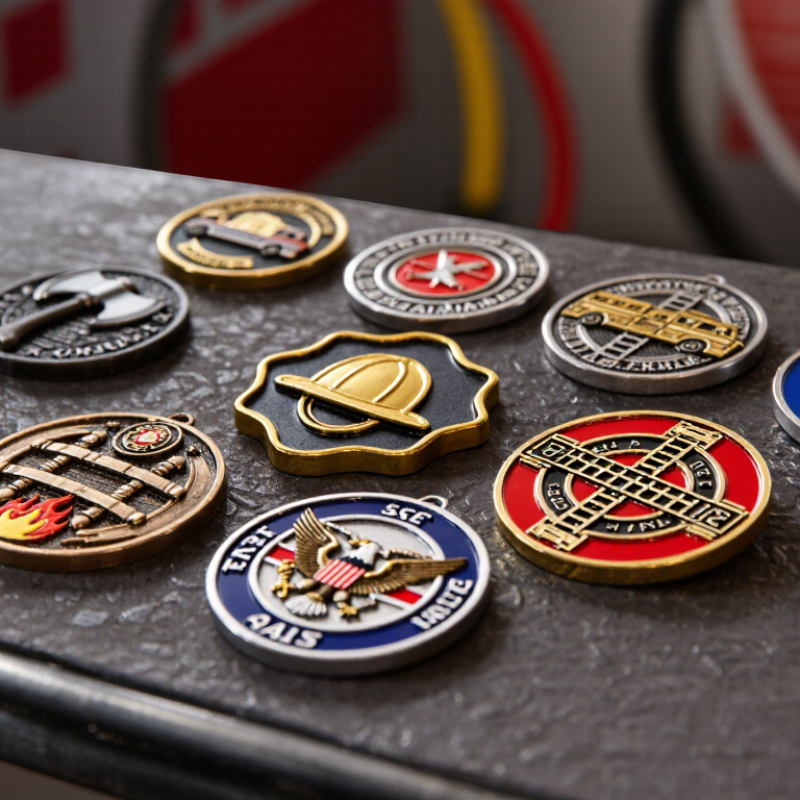
10 Best Firefighter Challenge Coins for Departments

Department Context: NFPA’s 2020 Estimate—1.04M Firefighters, 65% Volunteer

The NFPA estimated that the United States had about 1.04 million firefighters in 2020, with roughly 65 percent serving as volunteers. That figure is an estimate, not a current headcount, but it highlights how much fire protection depends on people balancing emergency calls with jobs, family, and community life. A department coin can acknowledge that commitment without pretending a small object tells the whole story.

For a volunteer company, a useful design might show a local station, a crossed-tool emblem, or the year a crew formed. Keep lettering readable on a coin held in a gloved hand, and check dates, titles, and symbols with department members before ordering. Details matter. A shift number or town name may mean more than elaborate decoration. Still, a coin cannot ease long shifts or fill staffing gaps; it can only mark shared service. Departments should consider who will receive one: recruits, retiring members, mutual-aid partners, or everyone who turns out when the pager sounds. The best choice reflects the people who will carry it.

Selection Criteria: Match Metal, Relief, Finish, Size, and Cost to Purpose

Choosing among the 10 best firefighter challenge coins starts with their purpose. A retirement keepsake may need more detail than a coin handed out after a training milestone. Match the metal to the setting: brass-colored finishes feel traditional, while darker finishes can make raised lettering stand out. Ask how the coin will be carried. A pocket coin may collect scratches quickly.

Relief affects both appearance and readability. Deep relief gives a helmet, crossed tools, or station number a tactile edge, but tiny lettering can still blur. Request a proof at actual size, not just a polished screen image. Finish matters too. Antique surfaces can highlight recessed details, while bright plating looks crisp but may show fingerprints. Small differences count.

Size changes weight, cost, and comfort. A larger coin offers room for department details, yet may feel awkward in a uniform pocket. Compare a sample beside a common coin before approving the dimensions. Then review the full cost, including setup, individual packaging, shipping, and any rush charge. Get the details in writing. I have seen attractive mockups hide practical trade-offs; a slightly simpler design may serve members better. Still, budgets are not the only measure. Choose a coin that feels sturdy, reads clearly, and suits the moment it will mark.

Top 10 Coins I: Maltese Cross, Badge, Station, Apparatus, and Unit Designs

A strong firefighter challenge coin should feel like it belongs to the crew, not a catalog page. The Maltese cross gives a familiar frame for department initials, a founding year, or a small emblem. Keep the lettering clear; tiny words disappear between the raised edges. Badge-shaped coins suit recognition gifts, while station designs can show a bay door, street number, or the outline of a local landmark. Small details matter. A short motto often reads better than a crowded list of names.

Apparatus and unit designs make the coin more personal. A side-profile engine, ladder truck, or rescue vehicle can reflect the department’s actual fleet, while a unit coin might mark a shift, training group, or shared milestone. Check the vehicle silhouette with members before production; even a minor cab detail can feel wrong to the people who use it. NFPA’s U.S. Fire Department Profile, based on 2020 data, estimated about 29,452 fire departments nationwide, with roughly 53% staffed entirely by volunteers. That scale suggests why one universal design rarely fits every department. Still, a coin cannot capture the whole job. Leave room for restraint, and ask firefighters whether the design feels authentic before ordering a full run.

10 Best Firefighter Challenge Coins for Departments – Top 10 Coins I: Maltese Cross, Badge, Station, Apparatus, and Unit Designs

Rank Design concept Key visual elements Useful department details Good fit for
1 Maltese Cross Eight-point cross, central fire-service emblem, contrasting enamel, and a clear outer border. Department name, city or district, and founding year can be placed around the center. General department recognition and member keepsakes.
2 Firefighter Badge Shield-shaped outline, rank or unit text, and a central helmet or crossed-tool motif. Use a service number or station identifier only when approved for department use. Recruit classes, promotions, and service milestones.
3 Fire Station Station façade, bay doors, station number, and a simple roofline silhouette. Include the station’s official number and community name; keep small lettering legible. Station anniversaries and crew exchanges.
4 Fire Apparatus Side profile of an engine, ladder truck, or other department vehicle, with a restrained background. Vehicle number and apparatus type help distinguish the design without overcrowding it. Fleet recognition and apparatus commissioning events.
5 Specialized Unit Unit-specific imagery, such as a rescue rope, medical symbol, water stream, or hazmat protective gear. Label the unit clearly and use imagery that reflects its actual role and equipment. Rescue, EMS, wildland, water-rescue, or hazardous-materials teams.
6 Crossed Tools A crossed axe and pike pole or other department-approved tool arrangement, with a compact center mark. Choose tools familiar to the intended crew and avoid details too fine for a small coin. Crew gifts and operational-unit recognition.
7 Fire Prevention A simple flame, home, or smoke-alarm motif paired with a short safety message. Keep the wording brief so it remains readable at coin scale. Public education events and community outreach.
8 Memorial and Remembrance A respectful emblem, service dates where appropriate, and understated colors or finish. Confirm names, dates, and wording with the department and affected families before production. Memorial observances and remembrance ceremonies.
9 Training Academy Class year, academy name, and a helmet, ladder, or training-ground image. Class numbers and graduation dates make each coin specific to a cohort. Graduation, recruit milestones, and instructor recognition.
10 Department Anniversary Anniversary years, a founding-year date, and a central symbol representing the department’s history. Verify historical dates and use a layout that remains readable on both sides. Department milestones and commemorative events.

These are design concepts rather than specific products. Final artwork should use department-approved names, insignia, dates, and imagery.

Top 10 Coins II: Thin Red Line, Memorial, Recruitment, Retirement, and Award Coins

Firefighter challenge coins can mark service, shared risk, and moments a department wants to remember. A Thin Red Line design often uses a dark field and a single red stripe. Keep the stripe clear at coin size. Tiny lettering may disappear around the edge. Memorial coins call for restraint: a name, dates, and a simple emblem can feel more personal than crowded artwork. Every detail matters.

Recruitment coins should be welcoming and easy to carry, with department values stated plainly. Retirement coins can include a station number or years of service, but verify dates and spelling with the firefighter. Award coins benefit from a specific achievement, such as a rescue milestone or training honor. Generic praise can feel less meaningful. I have seen small wording choices change how a coin is received, so a proof review by several members is worthwhile.

Tips: Ask recipients what details they value before approving artwork. Check contrast under ordinary indoor light, not only on a bright screen. Order a sample if the budget allows. And leave room for correction; departments sometimes catch an important omission late.

Ordering and Care: Review Artwork, Approve Proofs, and Store Coins Properly

Before ordering firefighter challenge coins, gather the department’s approved insignia, wording, colors, and intended coin size. Check every detail against a clear reference file. Small lettering can blur when reduced, and similar shades may look different on metal. Ask the maker for a digital proof showing both sides, edge details, and color placement. Review it at full size, not only on a phone screen.

Have at least two people check names, dates, unit numbers, and spelling. A second review can catch mistakes that familiarity hides. I have seen a tiny date error become the detail everyone notices. Approve production only after the proof reflects the department’s actual requirements; keep a dated copy for your records. If a color or line looks uncertain, request a revised proof rather than hoping it will improve.

When the coins arrive, inspect a few from different parts of the shipment for finish, alignment, and visible defects. Handle them with clean, dry hands, then wipe fingerprints with a soft cloth. Avoid abrasive cleaners, which can scratch plated surfaces or dull enamel. Store coins in individual sleeves or a lined case, away from damp areas and loose metal objects. Check the storage spot occasionally. A display near a sunny window may look attractive, but prolonged light and heat can affect finishes over time. Coins kept for ceremonies deserve the same care as those displayed.

Firefighter Challenge Coin Size Options

Common nominal coin diameters, converted from inches to millimeters (1 in = 25.4 mm).

A 1.5-inch coin is a compact option; 1.75 inches offers more room for department insignia and lettering; and 2 inches provides a larger canvas for detailed artwork. Before ordering, review the artwork and approve the production proof. Store finished coins in a dry place to help protect their surfaces.

Back To Top