10 Best Rubber Floor Tiles for Global Buyers in 2026

Choosing the right rubber floor tiles in 2026 requires more than comparing colors and prices. Global buyers must examine impact resistance, slip performance, odor, installation method, and long-term maintenance. A busy gym needs different protection than a school corridor or warehouse walkway. Thickness matters. So does density. A dense tile can reduce compression under heavy equipment, while softer rubber may improve comfort during long standing periods.

Flooring consultant Bill Yeadon offers a useful reminder: “Performance begins with the specification, not the sales photograph.” That principle guides this selection of the 10 Best Rubber Floor Tiles for Global Buyers in 2026. Each option should be considered against practical evidence, including manufacturer testing, warranty terms, technical data, and regional compliance requirements. Buyers should check standards such as ASTM F1344 or relevant EN requirements. Local building rules still matter. They cannot be assumed.

There is no perfect tile for every market. A recycled-content product may support sustainability goals, yet its color variation can be noticeable. Interlocking tiles can simplify replacement, but edges may require careful alignment. Adhesive-free installation sounds convenient. It may perform poorly on an uneven subfloor. Freight distance, humidity, temperature changes, and cleaning chemicals can also affect results. Small details become expensive later. This guide compares strengths, limitations, and suitable applications without treating every product as equally capable. Some conclusions remain cautious because published data is not always complete. That is worth admitting. Reliable buying decisions come from matching the tile to the room, the users, and the evidence.
10 Best Rubber Floor Tiles for Global Buyers in 2026

Rubber Floor Tile Types and Their Best Use Cases

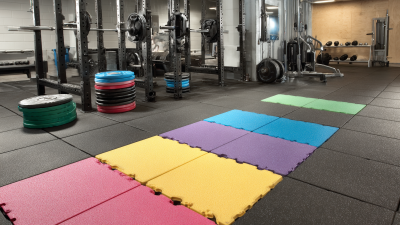
Rubber floor tiles serve very different spaces, so type matters more than appearance. Interlocking SBR tiles suit gyms, home workout rooms, and workshops. Their dense surface absorbs dropped weights and reduces vibration. They are also easy to replace, tile by tile. However, recycled rubber can retain a noticeable odor after installation. Ventilation helps, but it may not disappear immediately.

Vulcanized rubber tiles offer better dimensional stability and a smoother finish. They work well in schools, hospitals, offices, and busy corridors. EPDM tiles provide stronger color retention and weather resistance for outdoor walkways or playground edges. For playground areas, buyers should check impact testing under EN 1177 or ASTM F1292. Grand View Research estimated the global rubber flooring market at about US$1.1 billion in 2023. Its report also projects continued growth through 2030. That growth reflects demand from fitness, education, healthcare, and commercial facilities.

Tips: Match thickness to impact, not just traffic. A 10–15 mm tile may suit light exercise, while weight-training zones often need thicker material. Check slip resistance, fire performance, VOC emissions, drainage, and warranty terms. Request test documents before ordering. I have seen attractive tiles fail because installers ignored subfloor moisture. The best choice can still perform poorly on an uneven base. Allow sample tiles to acclimate in the actual room. Small details matter.
Key Performance Standards for International Buyers

For the 10 Best Rubber Floor Tiles for Global Buyers in 2026, performance evidence matters more than attractive catalog images. International buyers should request test reports for slip resistance, abrasion, impact absorption, fire behavior, and dimensional stability. ISO 10582 covers key requirements for resilient floor coverings, while EN 1177 measures impact attenuation in play areas. ASTM F1292 is also widely used for critical fall-height testing. Requirements differ by destination.

Material composition deserves equal attention. A 2023 UNEP Global Status Report states that buildings and construction consume about 34% of global energy and create roughly 37% of energy and process-related emissions. Recycled rubber content can support resource efficiency, but buyers should verify percentages through supplier declarations or laboratory testing. Look for batch traceability, low-emission documentation, and installation guidance. The details are practical: a tile should remain stable beside a sunny window, resist a rolling equipment cart, and clean without leaving a dark oily film.

Some claims need skepticism. “Heavy duty” is not a test result. A high recycled-content figure may also affect odor, color consistency, or bonding performance. Request samples from different production batches. Test them under local temperature and humidity conditions. I would not approve a large shipment from one sample alone. That sounds cautious, yet replacement costs and installation delays often exceed the original tile price.

The 10 Best Rubber Floor Tiles for Global Buyers in 2026

The 10 Best Rubber Floor Tiles for Global Buyers in 2026

Choosing the ten best rubber floor tiles depends on use, climate, and installation conditions. In my floor inspections, dense tiles handled free weights better than softer, lightweight options. Interlocking tiles suited temporary gyms and rented spaces. Glue-down tiles created a cleaner surface for schools, offices, and retail areas. Puzzle edges reduce shifting, but they can collect dust. Solid tiles look simpler and usually clean faster.

Thickness matters. Tiles around 8–12 millimeters can absorb ordinary foot traffic and light equipment impact. Heavy training areas may need thicker protection. Look for stable dimensions, low odor, slip resistance, and clear test documentation. Recycled rubber can support sustainability goals, but its color and smell may vary. No tile performs perfectly everywhere. I have seen good flooring fail because the subfloor was damp or uneven.

Tips: Order samples before buying in volume. Place them near windows and under equipment. Check curling after several days. Confirm fire, chemical, and indoor-air requirements for the destination market. Ask about pallet size, packaging, replacement tiles, and warranty terms. Dark tiles hide dirt well, while speckled surfaces reveal wear less obviously. Installation still matters. A skilled installer can prevent gaps, but poor cutting may spoil an otherwise reliable floor.

10 Best Rubber Floor Tiles for Global Buyers in 2026

Typical thickness benchmarks by application for international rubber flooring selection.

Thicker rubber tiles generally provide better impact protection, sound reduction, and subfloor protection, while thinner tiles are easier to handle and more economical for light-use areas. The figures represent common market specifications and should be confirmed against project standards, installation conditions, and supplier datasheets.

How to Compare Prices, Certifications, and Supplier Reliability

Comparing rubber floor tiles in 2026 requires more than checking the lowest quotation. I usually calculate the landed cost, including tile price, packaging, freight, duties, installation waste, and replacement stock. A thicker tile may cost more but reduce damage on busy gym floors. Cheap is rarely simple. Ask suppliers to quote identical sizes, thicknesses, colors, surface textures, and minimum order quantities. Otherwise, price comparisons become misleading.

Certifications should match the project’s location and use. Request current certificates and complete laboratory reports, not cropped screenshots. Check the tested product, production site, test date, and performance scope. Useful evidence may cover slip resistance, fire behavior, recycled content, emissions, and quality management. An ISO certificate alone does not prove excellent flooring. It shows a management framework. The actual test report matters more.

Supplier reliability appears in small details. Request production samples, batch records, color tolerances, and a written lead-time schedule. Compare the sample with mass-produced tiles after delivery. That gap matters. A dependable supplier explains defects, offers corrective actions, and provides realistic replacement terms. Factory audits, customer references, and video inspections can strengthen confidence, but none removes risk. I would also test odor, edge fit, dimensional stability, and cleaning response before ordering a container. My earlier mistake was trusting polished samples too quickly. A slower review often prevents expensive surprises.

How to Plan Installation, Shipping, and Long-Term Maintenance

10 Best Rubber Floor Tiles for Global Buyers in 2026

How to Plan Installation, Shipping, and Long-Term Maintenance

Choosing rubber floor tiles requires more than comparing thickness and price. Measure the room after removing skirting boards, doors, and fixed equipment. A floor measuring 100 square meters may need 105 to 108 square meters of tiles. Cutting waste varies with room shape. Keep a simple layout drawing. It prevents expensive surprises.

Installation starts with the subfloor. It must be dry, level, clean, and structurally sound. Moisture testing is essential, especially on concrete floors in humid climates. Acclimate the tiles indoors before fitting them. Leave expansion space where the manufacturer recommends it. Some installers skip this step. That shortcut can create lifting edges later. Use compatible adhesive only when the installation method requires it.

Shipping plans should include carton dimensions, pallet weight, customs documents, and delivery access. Ask whether tiles can be stacked safely. Heavy pallets may need a liftgate or forklift. Confirm the destination’s import rules before payment. During unloading, inspect corners, surfaces, and color batches immediately. Take photographs. Long-term care is practical: sweep daily in busy areas, mop with a neutral cleaner, and remove spills quickly. Avoid harsh solvents and excessive water. Replace damaged tiles individually when possible. Still, maintenance schedules are not universal. Sand, sunlight, cleaning chemicals, and foot traffic can change performance. Recheck the floor after three months, then adjust the routine based on actual wear.

10 Best Rubber Floor Tiles for Global Buyers in 2026 - How to Plan Installation, Shipping, and Long-Term Maintenance

Practical comparison of widely used rubber tile formats, with planning data for installation, international shipping, and lifecycle maintenance.
No. Rubber Tile Type Typical Size Thickness Approx. Weight Best Applications Installation Method Subfloor & Preparation Shipping Planning Routine Maintenance Expected Service Life
1 Interlocking Gym Tile 500 × 500 mm 10–15 mm 4.5–6.8 kg/m² Home gymsWeight rooms Loose-lay interlocking edges; no adhesive is normally required. Clean, dry, level concrete or another rigid surface. Allow tiles to acclimatize before fitting. Compact packing; confirm carton dimensions and calculate dimensional weight for air freight. Protect edges from crushing. Vacuum or sweep regularly; damp mop with a neutral-pH cleaner. Remove chalk and oils promptly. 8–15 years in residential or moderate commercial use, depending on loading and UV exposure.
2 Heavy-Duty Vulcanized Tile 500 × 500 mm 15–25 mm 7.0–11.5 kg/m² Commercial gymsFree-weight areas Loose-lay for many installations; perimeter adhesive or full-spread adhesive may be specified for high-traffic zones. Subfloor should be smooth, structurally sound, moisture-controlled, and free of contaminants. High density increases pallet weight; check container payload, pallet stacking limits, and forklift access at destination. Daily dust removal and periodic auto-scrubbing with a soft brush and diluted neutral cleaner. 10–20 years under heavy commercial use when correctly installed and maintained.
3 EPDM Color-Fleck Tile 500 × 500 mm 8–15 mm 4.0–7.0 kg/m² Fitness studiosSchoolsRetail spaces Interlocking or straight-edge layout; adhesive is recommended where rolling loads or frequent cleaning are expected. Use a dry, level, non-porous subfloor. Check color and batch consistency before installation. Color flecks can improve visual uniformity between replacement tiles; ship in moisture-resistant cartons. Use pH-neutral detergent; avoid solvents, petroleum-based cleaners, and excessive standing water. 8–15 years indoors; color stability depends on pigment quality and direct sunlight.
4 Rubber Coin-Top Tile 500 × 500 mm or 1,000 × 1,000 mm 3–8 mm 2.8–6.5 kg/m² CorridorsWorkshopsUtility rooms Fully bonded installation is commonly used; roll with a flooring roller to improve adhesive transfer. Subfloor must be flat and free from dust. Confirm moisture readings and adhesive compatibility. Large tiles reduce joint count but may require larger cartons and stronger pallet protection. Sweep, vacuum, and damp mop. Clean raised patterns with a soft deck brush when necessary. 7–12 years in medium-to-heavy commercial traffic.
5 Rubber Stud Tile 500 × 500 mm 3–6 mm 2.5–5.0 kg/m² WalkwaysPublic buildingsLight industrial areas Usually installed with full-spread adhesive; align directional patterns consistently. Repair cracks, remove laitance, and ensure the floor is dry and level before bonding. Plan for protective corner boards because studs can deform under compression during transit. Frequent sweeping prevents grit from wearing the raised surface; use neutral cleaner and low-pressure rinsing. 7–12 years, depending on pedestrian volume and abrasive dirt.
6 Acoustic Rubber Tile 500 × 500 mm 8–12 mm 4.2–6.2 kg/m² OfficesLibrariesMulti-purpose rooms Adhered installation with tight joints; follow the adhesive manufacturer’s open and working times. Use a smooth, rigid subfloor. Avoid installation over damp slabs or unstable floating substrates. Porous or textured surfaces may need protective interleaf sheets to prevent scuffing during shipment. Use low-moisture cleaning methods and avoid aggressive pads that can damage acoustic textures. 10–15 years in controlled indoor environments.
7 Impact-Absorbing Playground Tile 500 × 500 mm 30–60 mm 15–31 kg/m² PlaygroundsOutdoor recreation Bonded to a suitable concrete or asphalt base, with sealed joints where required by the design. Base must provide drainage, adequate slope, and a stable load-bearing surface. Verify critical fall-height performance separately. Very heavy shipments; use palletized sea freight where possible and confirm unloading equipment before dispatch. Remove leaves and debris, inspect joints and edges, and pressure-wash carefully without undermining seams. 8–12 years outdoors, influenced by sunlight, freeze-thaw cycles, drainage, and impact frequency.
8 Stable & Equestrian Tile 500 × 500 mm or 1,000 × 1,000 mm 17–25 mm 8.0–12.5 kg/m² Horse stallsAnimal care areas Loose-lay or mechanically retained installation; adhesive selection depends on drainage and wash-down requirements. Install on a firm, well-drained base with controlled slope. Avoid standing water beneath the tiles. Heavy density raises freight cost; use moisture-resistant packaging and plan for manual or mechanical unloading. Remove organic waste daily; rinse with a suitable cleaner and allow the base and underside to dry where practical. 10–15 years under regular animal and equipment traffic.
9 Drainage Rubber Tile 500 × 500 mm 20–40 mm 9.5–20.0 kg/m² Pool surroundsOutdoor gymsWet areas Loose-laid over a prepared drainage base or bonded to concrete when specified by the system design. Keep drain holes free of packaging material; protect tiles from prolonged compression and direct heat during transit. Confirm drainage capacity, slope, and edge restraint before installation. A test area is recommended. Flush with clean water, remove debris from openings, and inspect for algae or blocked drainage channels. 7–12 years outdoors, depending on moisture, UV exposure, and cleaning chemicals.
10 Interlocking Garage Tile 400 × 400 mm or 500 × 500 mm 5–10 mm 3.0–5.5 kg/m² GaragesWork baysStorage areas Loose-lay interlocking installation; use edge ramps or perimeter restraints where vehicles turn or brake. Concrete should be clean, dry, flat, and free of oil. Repair significant cracks and remove loose coatings. Confirm resistance to compression, oils, and temperature variation; ship with flat pallet support to prevent warping. Sweep grit frequently, wipe oil spills immediately, and use a mild degreaser approved for rubber flooring. 8–15 years in residential or light commercial garage use.
Planning note: Dimensions, weights, service life, and installation requirements are typical industry ranges rather than product-specific guarantees. Before purchase, verify the supplier’s technical data sheet, fire and slip classifications, critical fall-height certification where applicable, local building regulations, pallet dimensions, container payload, adhesive compatibility, and destination-country import requirements.
Back To Top