
China Best Custom Indoor Trampoline Supplier?

Choosing the China Best Custom Indoor Trampoline Supplier requires more than comparing prices and colorful product photos. Buyers need evidence of engineering skill, factory experience, material control, and dependable communication. A trampoline may look simple, yet every frame, spring, pad, net, and anchor affects user safety and long-term performance.

Jeff Platt, a recognized trampoline-park executive, once said, “We are not in the trampoline business. We are in the experience business.” That idea remains useful when evaluating a Custom Indoor Trampoline Supplier. A capable manufacturer should understand visitor flow, ceiling height, impact zones, cleaning routines, and maintenance access. It should also provide clear drawings, load information, production samples, and installation guidance.

The best supplier is not always the cheapest one. That sounds obvious, but many buyers still compare only the final quotation. A lower price can hide thinner padding, weaker stitching, limited testing, or difficult replacement support. I have seen attractive concepts become expensive after revisions. This is where careful factory audits and direct technical questions matter.

Look for suppliers with documented quality procedures, experienced welders, responsive engineers, and export references. Ask how they handle customized layouts, spare parts, packaging, and after-sales problems. Request close-up photos of seams, foam protection, connectors, and safety net attachments. Small details matter.

No supplier is perfect. Even a strong factory may need clearer communication or better documentation. A thoughtful buyer should test those weaknesses before signing. This guide examines how to identify a reliable Custom Indoor Trampoline manufacturer in China, while balancing design ambition, operational practicality, and responsible purchasing decisions.
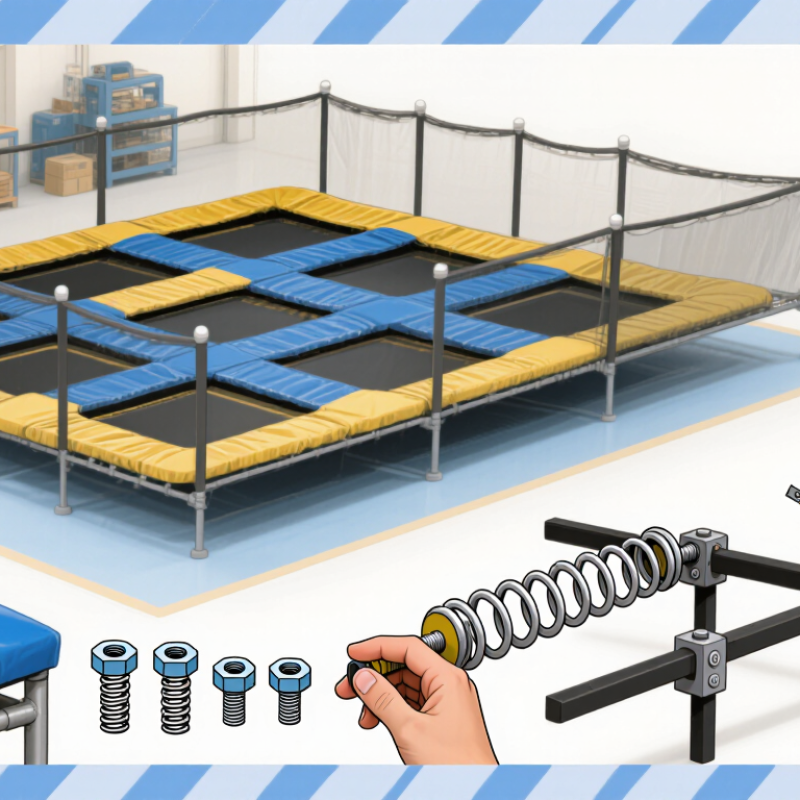
China Best Custom Indoor Trampoline Supplier?

What Is a Custom Indoor Trampoline?

What Is a Custom Indoor Trampoline?

A custom indoor trampoline is an activity system designed for a specific venue, audience, and operating plan. It is more than connected jumping beds. Designers may combine angled trampolines, foam pits, airbags, climbing walls, dodgeball courts, and toddler zones. Ceiling height, floor area, visitor flow, and local fire access shape every decision.

The market is expanding. Grand View Research’s 2023 analysis forecast strong growth for the global trampoline park market through 2030, with a reported compound annual growth rate of about 14.8%. That demand encourages more flexible layouts. Still, bigger is not always better. A crowded landing zone can reduce visibility and increase supervision pressure. We learned that attractive colors cannot correct poor circulation.

A reliable custom design should follow ASTM F2970 guidance for trampoline court design, installation, operation, maintenance, and inspection. It should also include impact-absorbing surfaces, controlled entry points, clear height markings, and inspection records. The International Association of Amusement Parks and Attractions emphasizes documented safety procedures and staff training across indoor attractions.

Practical details matter: sealed foam surfaces are easier to clean, while poorly placed padding can hide damage. Every project needs testing after installation. Plans can look perfect on paper. Real users move differently.

Key Types and Customization Options for Indoor Trampolines

Choosing a custom indoor trampoline supplier starts with understanding the right trampoline type. Open-jump trampolines suit active parks and fitness rooms. Foam-pit trampolines support safer landing practice during beginner sessions. Wall trampolines add climbing and jumping challenges in compact spaces. Toddler trampolines should use lower platforms, soft edges, and controlled bounce levels. Experienced installers also check ceiling height, floor strength, emergency access, and daily cleaning routines before recommending equipment.

Customization can include frame dimensions, jump-bed colors, padding thickness, safety net design, entry gates, lighting, and printed activity zones. A reliable supplier should provide material specifications, load ratings, installation drawings, and maintenance guidance. Ask for impact-absorption test information rather than accepting general safety claims. The design may look impressive, but poor spacing can create collision risks. That detail is easy to miss.

Tips: Measure the room twice, including beams and ventilation ducts. Request a layout showing user flow and staff sightlines. Choose replaceable padding covers and rust-resistant hardware for long-term maintenance. Discuss age groups, session capacity, and cleaning frequency before approving the design. If the supplier avoids technical questions, reconsider the partnership. A small sample section can reveal stitching quality, foam firmness, and surface grip. It may cost more initially, but replacement work later can disrupt operations. Even careful planning is not perfect; real visitor behavior may differ from the original design.

How to Evaluate an Indoor Trampoline Supplier in China

China Best Custom Indoor Trampoline Supplier?

How to Evaluate an Indoor Trampoline Supplier in China

A reliable supplier should show real factory experience, not only polished catalog photos. Ask for a live video tour, production capacity, and recent project evidence. Check the steel frame, welding points, spring protection, foam density, and fabric stitching. These details reveal more than marketing claims. Request material specifications and load-test records for each major component. Certificates should be current, traceable, and verified through an independent testing organization.

A custom order needs careful communication. Confirm court dimensions, colors, logo placement, safety zones, packaging, and installation requirements in writing. Order a physical sample when possible. A sample can still hide mass-production problems, so request photos during assembly and a pre-shipment inspection. Review the supplier’s response time and replacement policy. Slow replies may become expensive after delivery. I have found that clear drawings prevent many disputes, although drawings alone cannot replace factory checks.

Tips: Compare at least three quotations. Do not choose the lowest price automatically. Ask who controls quality on the production floor, and request inspection photos with visible dates. Check whether spare padding, springs, and fasteners are available. Also review export packaging, delivery timelines, and installation guidance. A dependable supplier should explain weaknesses honestly, not promise perfection.

China Best Custom Indoor Trampoline Supplier? - How to Evaluate an Indoor Trampoline Supplier in China
Evaluation Dimension Recommended Weight Practical Evaluation Benchmark Evidence to Request Suggested Scoring Method Priority
Product Safety and Applicable Standards 25% The supplier should identify the safety requirements applicable to the destination market. For commercial trampoline courts, ASTM F2970 is a relevant U.S. safety specification. EN 13219 covers functional and safety requirements for trampolines used in gymnastics. Requirements should be matched to the final product configuration and installation environment. Current test reports, technical drawings, safety risk assessment, material specifications, installation instructions, and a written compliance matrix showing which requirements are covered. 5 = complete, product-specific evidence
3 = partial evidence
1 = unsupported claims
Critical
Engineering and Custom Design Capability 15% The supplier should be able to convert site dimensions, user capacity, activity zones, height restrictions, evacuation routes, and maintenance access requirements into approved engineering drawings before production. Anonymized project drawings, 2D or 3D layouts, load calculations where applicable, design revision records, bill of materials, and a documented approval process. 5 = dedicated engineering workflow
3 = basic adaptation only
1 = catalog-only design
High
Frame, Spring, Mat, and Padding Materials 15% Structural steel, welds, springs, jumping mats, foam, PVC or coated fabrics, nets, and protective padding should be specified by grade, thickness, density, tensile strength, or other measurable properties appropriate to their function. Material certificates, incoming inspection records, coating specifications, foam density data, fabric test information, weld inspection procedures, and sample-based test results. 5 = traceable specifications and inspections
3 = general specifications
1 = no measurable data
High
Manufacturing Quality Control 12% Quality control should cover incoming materials, welding, cutting, sewing, foam assembly, surface finishing, dimensional checks, final assembly, and packaging. Critical dimensions should be recorded rather than checked only visually. Quality-control plan, inspection checklists, nonconformity reports, corrective-action records, calibration records, and photographs or videos of production inspections. 5 = documented control at every key stage
3 = final inspection focused
1 = informal inspection
High
Factory Capacity and Production Stability 8% The supplier should demonstrate sufficient workshop space, trained labor, equipment, subcontractor control, and production planning for the project size and delivery schedule. Capacity should be assessed against the buyer’s required quantity, not a generic monthly claim. Factory audit, production-flow description, equipment list, staffing overview, production schedule, capacity calculation, and evidence of controlled subcontracting. 5 = capacity supported by records
3 = plausible but weakly documented
1 = unsupported capacity claims
Medium
Installation and Site-Integration Support 8% A commercial indoor trampoline installation should account for floor conditions, ceiling clearance, access routes, anchor points, adjacent equipment, emergency exits, protective barriers, and inspection after assembly. Installation manual, site survey checklist, anchoring details, installation method statement, commissioning checklist, installer qualifications, and post-installation inspection records. 5 = complete site-to-commissioning process
3 = basic installation guidance
1 = shipment-only support
High
Testing, Inspection, and Traceability 7% Each production batch or project should be traceable through purchase orders, material lots, inspection results, packing records, and final approval. Testing should be relevant to the actual design rather than based only on a generic sample. Product serial or batch records, inspection reports, test samples, packing lists, factory acceptance test format, and retained quality documentation. 5 = full project traceability
3 = partial traceability
1 = no traceability system
Medium
After-Sales Service and Spare Parts 5% The supplier should provide replacement parts for wear items such as jumping mats, springs, padding, netting, fasteners, and protective covers. Response times, warranty exclusions, maintenance instructions, and responsibility for installation should be clear. Warranty terms, spare-parts list, recommended maintenance schedule, service response procedure, replacement-part lead times, and sample service records. 5 = structured lifecycle support
3 = standard warranty only
1 = unclear responsibility
Medium
Packaging and Export Logistics 3% Packaging should protect metal parts, padding, fabrics, and finished surfaces during domestic handling and international transport. Package dimensions and weights should be available for freight planning and import documentation. Packing specifications, container-loading plan, package photos, moisture and impact protection details, carton or crate markings, and export documentation samples. 5 = verified export-ready packaging
3 = standard packaging
1 = inadequate documentation
Medium
Commercial Transparency and Contract Control 2% The quotation should clearly separate product scope, customization, tooling, testing, installation, packaging, freight terms, spare parts, payment milestones, lead time, warranty, and change-order costs. Itemized quotation, technical annex, milestone schedule, acceptance criteria, change-control procedure, warranty clause, and clearly defined Incoterms. 5 = fully itemized and contract-ready
3 = minor omissions
1 = vague quotation
Lower
Evaluation guidance: score each dimension from 1 to 5, multiply the score by the recommended weight, and require satisfactory evidence for all critical safety and engineering criteria before comparing price or lead time.

The Custom Trampoline Design and Manufacturing Process

A custom indoor trampoline begins with the space, not a catalogue image. Experienced designers examine ceiling height, floor area, user age, traffic flow, and cleaning routines. A family activity center may need a compact 6-by-8-meter layout, while a training room needs wider landing zones. CAD drawings and 3D models help confirm clearances before materials are ordered.

Manufacturing turns those decisions into measurable components. Engineers select steel frames, impact-absorbing foam, durable jumping mats, and protective padding for the intended use. Welds should receive visual and dimensional checks. Foam edges must fit tightly, without exposed gaps. Each prototype needs repeated load testing, surface inspection, and careful review of attachment points. Small details matter here.

Design revisions are normal. A first drawing can overlook a maintenance panel or make cleaning awkward. That mistake should be recorded, discussed, and corrected before production. A reliable supplier provides material specifications, inspection records, installation drawings, packaging details, and clear communication throughout the project. Sample approval is useful, but it cannot replace factory quality control. Ask how measurements are verified, how defective parts are handled, and whether production records remain traceable. Good custom manufacturing is not just about attractive colors or unusual shapes. It depends on practical engineering, honest testing, and a design that remains safe and serviceable after daily use.

Safety Standards, Quality Control, and Installation Requirements

China Best Custom Indoor Trampoline Supplier? Safety Standards, Quality Control, and Installation Requirements

Choosing a custom indoor trampoline supplier requires more than comparing prices. Ask for documented testing against applicable standards, such as ASTM or EN requirements. Standards vary by country and project type. A reliable supplier should provide material specifications, load information, inspection records, and clear maintenance instructions. Check the padding density, stitching, frame strength, spring protection, and flame-resistance documents. Small details matter. A loose seam can become a serious hazard.

Quality control should continue from the factory to the installation site. Request production photos, component checklists, and measurements before shipment. Inspect every panel, mat, connector, and anchor after delivery. The floor must be level and strong enough for the equipment. Installers should verify fall zones, ceiling clearance, access routes, emergency exits, and protective barriers. Anchoring must follow approved drawings, not guesswork. One practical lesson is uncomfortable: even excellent equipment can become unsafe after careless assembly. I have seen installation teams overlook uneven flooring because the surface looked acceptable.

Tips: Choose a supplier that offers technical drawings and on-site guidance. Keep a signed installation record. Schedule daily visual checks and regular professional inspections. Replace damaged padding quickly, even when the defect seems minor. Ask questions when documents are unclear. Silence is not proof of compliance.

Back To Top