
How to Choose Sewer Cleaning Equipment in 2026?

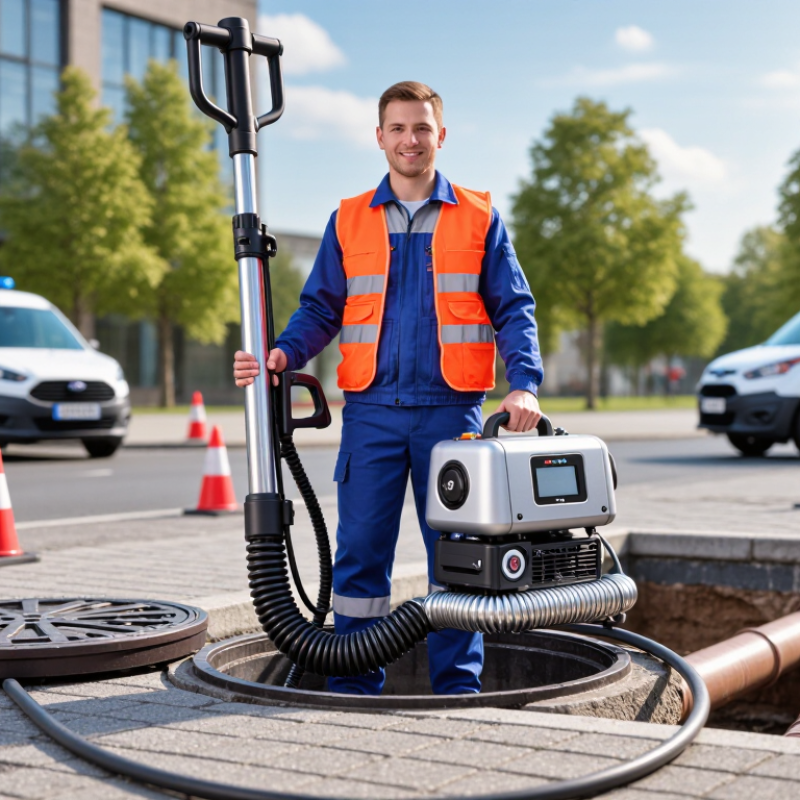
Choosing Sewer Cleaning Equipment in 2026 requires more than comparing horsepower, tank capacity, or purchase prices. Municipal crews face changing conditions daily. One street may contain soft silt. Another may hide roots, grease, gravel, or collapsed debris. The right machine must match pipe diameter, access conditions, cleaning frequency, and available water. It should also fit the crew’s real experience.

Veteran sewer operations consultant James R. O’Neal states, “The best cleaning machine is the one your crew can operate safely, maintain regularly, and deploy without delay.” That point deserves attention. A powerful jetter may impress during a demonstration. It may perform poorly when water access is limited. A combination truck can improve productivity, but its maintenance demands are higher. Smaller contractors may need compact equipment with flexible transport options.

Look beyond the brochure.

This guide examines jetting pressure, flow rate, vacuum performance, hose length, nozzle selection, tank design, control systems, and service support. It also considers fuel use and operator visibility. These details affect actual work beside a busy road, not just laboratory results. Digital monitoring may help track pressure, usage, and maintenance intervals. Still, technology cannot replace trained judgment.

There is no universal answer. That is the uncomfortable part. Buyers sometimes choose oversized equipment and discover that operating costs exceed expectations. Others save money initially, then struggle with downtime. A careful decision compares total ownership cost, local pipe conditions, crew capability, and long-term reliability. Performance matters. Practical fit matters more.
How to Choose Sewer Cleaning Equipment in 2026?

Define Sewer Cleaning Needs and Site Conditions

Before choosing sewer cleaning equipment in 2026, define the actual cleaning need. Record pipe diameter, material, length, slope, access points, and average flow. A 150 mm clay pipe needs different control than a 900 mm concrete trunk line. Identify the blockage type too. Grease, roots, sand, and hardened deposits require different water pressure, nozzle design, and cutting strength. The U.S. Environmental Protection Agency’s 2022 Clean Watersheds Needs Survey, published in 2024, estimates $630.1 billion in wastewater infrastructure needs. That figure shows why cleaning decisions should protect long-term asset condition, not only remove today’s obstruction.

Site conditions can change the equipment choice quickly. Check road width, traffic exposure, hose reach, water availability, discharge controls, and emergency access. A compact vacuum unit may suit a narrow urban lane, while a high-capacity combination unit may be safer near deep manholes and heavy sediment. The Water Environment Federation recommends condition-based maintenance and documented inspection practices. Field records should include jetting pressure, recovered material, work duration, and pipe response. I have seen neat specifications fail because operators ignored low water supply. That mistake is expensive. It is also avoidable.

Tips: Inspect upstream and downstream sections before cleaning. Match nozzle size to the pipe, not the truck. Use CCTV after difficult work. Recheck fragile or heavily corroded pipes, because aggressive cleaning can expose hidden damage. Ask whether the proposed method controls debris safely. A powerful machine is not always the right machine.

Compare Sewer Cleaning Equipment Types and Core Functions

How to Choose Sewer Cleaning Equipment in 2026?

Choosing sewer cleaning equipment starts with the blockage, pipe size, and working environment. High-pressure water jetters use focused water to remove grease, sludge, roots, and loose debris. They work well in long, continuous pipe runs. Mechanical cable machines use rotating cables and cutting heads. They are useful for dense obstructions and smaller access points. However, operators must control cable tension carefully.

Combination sewer cleaners pair water jetting with vacuum recovery. They can flush debris and remove wastewater in one operation. This improves site control, especially near busy roads or sensitive facilities. Vacuum units alone mainly collect sludge, sand, and liquid waste. They do not replace cutting tools when roots or hardened deposits block the pipe. Inspection cameras add another core function. They show pipe conditions before and after cleaning, reducing guesswork.

Tips: Match nozzle pressure and flow to the pipe material. Check hose length, tank capacity, suction strength, and access width. Keep spare nozzles and cable sections available. I once focused too much on maximum pressure. The result was slower work because setup and transport took longer. That experience changed my selection process. A powerful machine is not always the most practical choice. Measure real site conditions, record recurring blockages, and review cleaning results after each job. Small observations often reveal equipment limits.

Match Equipment Capacity to Pipe Size, Blockage, and Access

How to Choose Sewer Cleaning Equipment in 2026?

Choosing sewer cleaning equipment starts with the pipe, not the machine. Measure the pipe diameter, length, material, and access points before selecting capacity. A small lateral line may need a compact cable machine or controlled water jetter. Large mains require stronger flow, longer hoses, and stable pressure. Oversized equipment can damage fragile pipes. Undersized equipment may stall against hardened grease or roots.

Blockage type matters just as much. Grease responds to hot water and suitable jetting nozzles. Heavy scale may need cutting tools, but aggressive cleaning can expose weak joints. I have seen operators focus on pressure while ignoring nozzle angle. That choice wasted time. Access changes everything. Narrow manholes, sharp bends, and limited vehicle space may require flexible hoses, remote controls, or portable equipment. Check hose reach carefully. “Almost long enough” is not enough.

Tips: Match water flow and pressure to the pipe condition, not only its diameter. Keep inspection footage beside the equipment record. It reveals whether the blockage is deep, recurring, or structural. Test on a short section when the pipe history is uncertain. This step feels slow, but it can prevent costly damage. Also, train operators to recognize surging, unusual vibration, and dirty return water. Small warning signs are easy to dismiss. That is where my earlier equipment choices were sometimes too optimistic.

How to Choose Sewer Cleaning Equipment in 2026? - Match Equipment Capacity to Pipe Size, Blockage, and Access

Typical Pipe Inside Diameter Common Blockage or Cleaning Objective Access Conditions Recommended Equipment Type Typical Working Capacity Useful Tool, Hose, or Cable Size Selection Guidance
50–100 mm
(2–4 in)
Hair, soap, light grease, paper, and small soft stoppages in fixtures or branch lines Indoor cleanout, floor drain, sink opening, or short branch with several bends Small electric drum machine or compact sectional cable machine Approximately 15–30 m cable reach; low to moderate torque 8–16 mm flexible cable; small drain auger or retrieval tool Choose flexible equipment that can pass bends without damaging traps or glazed surfaces. Use a camera before aggressive cutting when the pipe condition is unknown.
100–150 mm
(4–6 in)
Grease, paper accumulation, wipes, light roots, and recurring residential blockages Accessible cleanout or shallow inspection chamber; moderate bends possible Medium drum or sectional cable machine; compact water jetter for grease and flushing 25–45 m cable reach, or about 70–140 bar at 25–50 L/min for jetting 16–22 mm cable; 10–13 mm high-pressure hose; penetrating or flushing nozzle Use a rotating cable for localized obstructions. Water jetting is generally more effective for grease and for flushing loosened debris downstream.
150–300 mm
(6–12 in)
Heavy grease, rags, sediment, wipes, mineral deposits, and moderate root intrusion Manhole or large cleanout with reasonable hose or cable deployment space Trailer-mounted or truck-mounted high-pressure water jetter; heavy-duty sectional machine where water access is limited Approximately 100–200 bar at 40–100 L/min; 45–90 m hose reach is common 13–19 mm hose; root-cutting, penetrating, flushing, or descaling nozzle Prioritize water flow for transporting debris. Pressure alone does not guarantee cleaning performance; nozzle size, hose length, and downstream discharge capacity must be matched.
300–600 mm
(12–24 in)
Dense sediment, sand, gravel, grease mats, roots, and long-term deposits Manhole access with space for hose handling and safe traffic control High-flow water jetter, often supported by a vacuum or combination sewer cleaner for solids removal Approximately 150–250 bar at 60–150 L/min 19–25 mm hose; large flushing, root-cutting, or descaling nozzle Use vacuum recovery when sediment volume is high. Confirm that the pipe has enough structural condition to tolerate root cutting or abrasive descaling.
600–1,200 mm
(24–48 in)
Large sediment deposits, silt, gravel, roots, grease, and maintenance cleaning before inspection Large manholes or access chambers; equipment may need to operate from a roadway High-flow combination jet-vacuum unit or large-capacity sewer cleaner Approximately 150–250 bar at 120–250 L/min; vacuum performance selected according to lift and solids volume 25–32 mm hose; large-bore flushing or specialized root-cutting nozzle Capacity should be based on the expected solids load, not only pipe diameter. A high-flow pump without adequate vacuum recovery can simply move debris farther downstream.
Over 1,200 mm
(48 in)
Large sediment beds, construction debris, heavy silt, and inspection preparation Man-entry-sized access may be available, but confined-space controls are essential Large combination sewer cleaner, high-capacity vacuum excavator, or specialized crawler and flushing system Often above 200 L/min for flushing; vacuum capacity determined by lift distance, solids density, and haul volume Large-diameter hose, suction tube, and engineered nozzle system Do not assume a larger pump is automatically better. Verify structural condition, flow restrictions, water supply, disposal capacity, and confined-space requirements before work begins.
Any diameter with heavy roots Fine root hairs, fibrous roots, or thick root masses entering through joints Usually requires a manhole, cleanout, or access point close to the affected section Water-jet root cutter, rotary chain cutter, or cable machine with a suitable root-cutting head Equipment capacity must match the pipe diameter; cutting force should be controlled to protect joints and liners Rotary chain, root saw, or specialized cutting nozzle sized for the pipe Remove cut roots by flushing or vacuuming. Root removal is usually temporary unless the structural defect or infiltration point is repaired.
Any diameter with limited access Blockage located beyond long runs, multiple bends, restricted chambers, or narrow service areas Small cleanout, difficult vehicle positioning, limited water supply, or restricted hose deployment Portable sectional machine, compact drum machine, smaller jetter, or push-camera-assisted cleaning system Prioritize reach, portability, cable flexibility, and water recovery over maximum pressure Flexible cable or smaller hose selected for the bend radius and pipe material Measure the access opening and route length first. Equipment that cannot physically reach the obstruction is unsuitable regardless of its rated pressure or motor power.
Any diameter with unknown condition Recurring blockage, suspected collapse, offset joint, corrosion, deformation, or fragile pipe Accessible cleanout or manhole suitable for camera insertion Inspection camera followed by controlled cable or low-impact jetting equipment Start with the lowest effective pressure, torque, or cutting force and increase only after inspection Push camera, tractor camera, locating sonde, and damage-appropriate cleaning tool Inspection should precede aggressive cleaning when damage is suspected. Record pipe material, defect location, diameter, access points, and post-cleaning condition.

Capacity ranges are practical planning values rather than universal specifications. Final selection should account for pipe material, actual inside diameter, blockage density, hose or cable length, elevation change, available water, downstream flow, waste disposal capacity, and applicable safety requirements.

Evaluate Safety, Maintenance, Mobility, and Operating Costs

How to Choose Sewer Cleaning Equipment in 2026?

Safety should guide every equipment decision, not appear as an afterthought. Choose systems with emergency shutoffs, guarded moving parts, stable hose reels, and clear controls. Remote operation can reduce exposure near traffic, splash zones, and unstable access points. Confined-space work still requires atmospheric testing and trained entry procedures. Equipment alone cannot remove those risks.

Maintenance affects reliability more than impressive pressure ratings. Select units with accessible filters, drain points, inspection panels, and replaceable wear parts. Record pump hours, hose condition, nozzle wear, and fuel use after each route. A missed inspection can become a costly breakdown. The assumption that newer equipment needs less care often fails in muddy conditions.

Mobility and operating cost deserve equal attention. Measure vehicle payload, turning space, cover access, hose length, water supply, and storage height before purchasing. A compact unit may reach more sites, but smaller tanks can increase refill trips. Calculate fuel, water, labor, maintenance, downtime, and disposal costs together. The 2022 U.S. EPA Clean Watersheds Needs Survey estimated $630.1 billion in wastewater infrastructure needs over 20 years. Meanwhile, the 2021 ASCE Infrastructure Report Card rated wastewater infrastructure D+. Those figures support lifecycle decisions, not simply low purchase prices. A cheaper machine can be expensive when one blocked route delays an entire crew.

How to Choose Sewer Cleaning Equipment in 2026?

Comparative evaluation of common sewer-cleaning equipment types using safety, maintenance, mobility, and operating-cost efficiency. Scores are based on typical field characteristics; higher scores indicate better performance or lower operating burden.

Compact sectional machines generally offer strong mobility and low running costs, while combination units provide broader cleaning capability but require higher maintenance, transport capacity, and operating budgets. High-pressure water jetters balance cleaning performance with moderate safety and operating requirements.

Select and Test Equipment for 2026 Operational Requirements

How to Choose Sewer Cleaning Equipment in 2026?

Selection should begin with the worksite, not a glossy specification sheet. In 2026, crews face aging pipes, heavier sediment, root intrusion, and tighter water budgets. The U.S. Environmental Protection Agency’s 2022 Clean Watersheds Needs Survey estimates $630.1 billion in wastewater infrastructure needs through 2041. That scale demands equipment measured against maintenance risk, not purchase price alone. Record pipe diameter, material, access distance, blockage history, and available water.

Select equipment around real operating conditions. Test a 100-meter run with bends, standing water, grease, roots, and representative sediment. Measure cleaning time, water use, hose recovery, cutter control, noise, and operator fatigue. Test under pressure. The American Society of Civil Engineers’ 2021 Infrastructure Report Card rated U.S. wastewater infrastructure D+, highlighting persistent system weaknesses. A machine that performs well inside a clean demonstration pipe may fail in a narrow, silt-filled line.

Require documented results before approval. Check emergency stops, guarding, lighting, remote controls, inspection access, and maintenance intervals. Ask technicians to repeat the trial after deliberate setup errors. This reveals fragile procedures. Do not guess. I would also record downtime during testing, because impressive output means little when repairs consume a shift. The final choice should fit crew skill, local pipe conditions, water availability, and the response time promised to residents.

Back To Top