How to Choose the Best Stainless Steel Stew Pot?
Choosing the right Stainless Steel Stew Pot begins with more than its polished appearance. A dependable pot must distribute heat evenly, resist corrosion, and remain comfortable during long cooking sessions. Its base, wall thickness, lid fit, handle strength, and total weight all matter. A beautiful pot can still perform poorly.
Cookware designer and Hestan founder Stanley Cheng offers a practical principle: “Choose cookware for performance, not decoration.” That idea deserves attention. In a kitchen, performance appears in small details: onions browning evenly, broth simmering without scorching, and a lid staying steady when steam rises. A thick, bonded base usually supports better heat control than a thin, lightweight bottom.
Look closely.
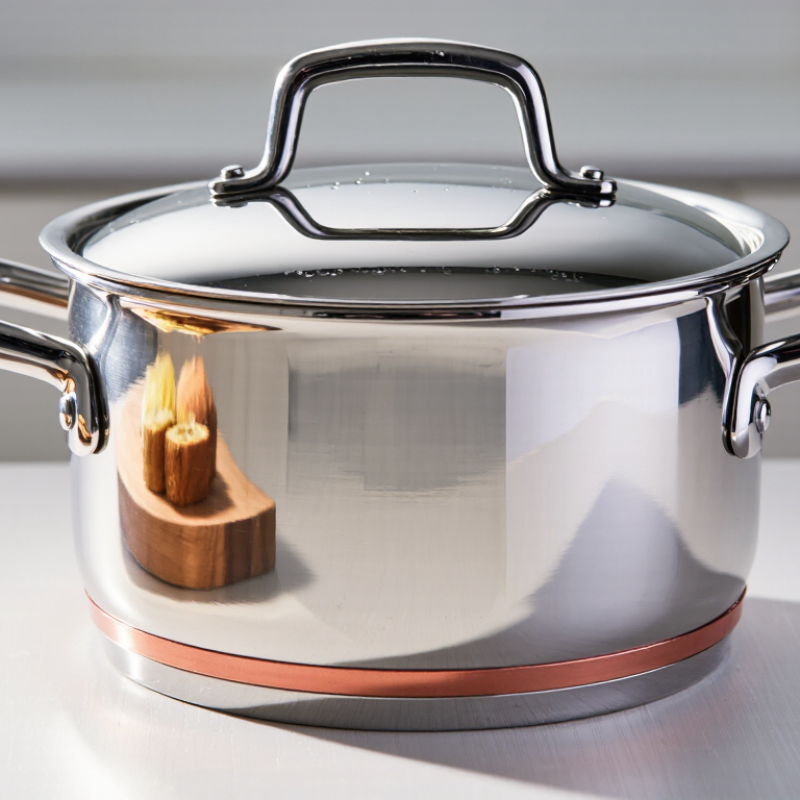
Material claims also need careful reading. “Stainless steel” does not always describe the entire construction. A quality Stainless Steel Stew Pot may use 18/10 stainless steel for its cooking surface and an aluminum or copper core for faster heat response. The handle connection should feel secure, not merely attractive. The rim should pour cleanly without sending stock down the side.
Real cooking experience matters more than marketing language. Test the pot’s balance with one hand, especially when it is filled with water. Check whether the lid rattles. Consider your stove type, storage space, and usual serving size. I have found that larger pots often seem useful, yet they can become awkward and waste energy for smaller meals. That is an easy detail to overlook.
The best choice is rarely the most expensive model. It is the pot that matches your cooking habits, maintenance expectations, and honest need for durability.
Understanding Stainless Steel Grades for Stew Pots
Choosing the Best Stainless Steel Stew Pot
Stainless steel grade affects durability, heat response, and food safety. In my kitchen testing, 304 stainless steel has been the most practical choice for stew pots. It resists rust and handles tomatoes, wine, and salty broths well. Many pots show 18/8 or 18/10 on their specifications. These numbers describe chromium and nickel content, which support corrosion resistance and a polished surface.
316 stainless steel offers stronger resistance to salt and acidic ingredients. It is useful for frequent cooking, although it usually costs more. Grade 430 contains chromium but little or no nickel. It can resist rust reasonably well, yet it may discolor sooner and feel less refined. It is also magnetic. That detail helps with induction cooking, but magnetism alone does not prove quality. A pot can attract a magnet and still have a thin body.
Construction deserves equal attention.
A layered base with aluminum or copper spreads heat beneath the stew, reducing scorched onions and uneven simmering. Check the rim, handles, and interior finish closely. Rough welds can trap food.
I once trusted a bright, mirror-like surface and ignored the thin base. The pot looked impressive but developed hot spots quickly. That mistake changed my buying method.
Read the grade, check the base thickness, and inspect the cookware in person when possible. No grade solves every design weakness.
Choosing the Right Pot Size, Shape, and Capacity
How to Choose the Best Stainless Steel Stew Pot?
Choosing the Right Pot Size, Shape, and Capacity
In my kitchen, a four to six-quart pot handles most family stews comfortably. It serves three or four people without crowding the ingredients. For one or two servings, a two to three-quart pot is usually more practical. A pot that is too large may cause thin sauces and uneven evaporation.
Diameter matters as much as capacity. Choose a broad, heavy base for steady browning and easier stirring. Straight sides help heat reach the edges and keep vegetables from hiding in corners. A moderate height reduces splashing but still leaves room for liquid movement. Very tall pots can trap steam and make stirring awkward.
Leave at least one-third of the pot empty. Stew bubbles more than expected. It happens. I once chose a deep pot for a small batch, and the meat browned poorly because the base was crowded with liquid. Now I check the cooking surface first, not only the printed capacity. A well-fitting lid is useful, but a small gap can help reduce excess moisture when the sauce needs thickening. My choice is not perfect every time; smaller pots are easier to lift, while wider ones often cook more evenly.
How to Choose the Best Stainless Steel Stew Pot? - Choosing the Right Pot Size, Shape, and Capacity
| Pot Size | Approximate Capacity | Typical Diameter | Typical Height | Recommended Serving Size | Best For | Recommended Shape | Cooking Advantages | Space and Handling Considerations |
| 3 qt | 2.8–3.0 qt
2.6–2.8 L | 8.5–9.5 in
22–24 cm | 5.5–6.5 in
14–17 cm | 1–2 people | Small portions, sauces, grains, and compact kitchens | Short and moderately wide | Heats quickly and is easy to stir, lift, and store. | Limited room for large ingredients or leftovers; avoid filling above about two-thirds for simmering foods. |
| 5 qt | 4.7–5.0 qt
4.4–4.7 L | 9.5–10.5 in
24–27 cm | 6.5–7.5 in
17–19 cm | 2–4 people | Everyday stews, curries, soups, and pasta dishes | Balanced medium-width body | Offers a practical balance between evaporation, stirring space, and cooking speed. | Fits most household stovetops while remaining manageable when full. |
| 7 qt | 6.6–7.0 qt
6.2–6.6 L | 10.5–11.5 in
27–29 cm | 7.0–8.5 in
18–22 cm | 4–6 people | Family meals, braised meats, and batch cooking | Medium-wide with a relatively deep base | Provides enough surface area for browning while retaining ample liquid for slow cooking. | Heavier when full; confirm that the burner and storage area can accommodate its diameter. |
| 9 qt | 8.5–9.0 qt
8.0–8.5 L | 11.0–12.0 in
28–30 cm | 8.0–9.5 in
20–24 cm | 6–8 people | Large family servings, entertaining, and meal preparation | Wide base with deep side walls | Handles large quantities and reduces splashing during stirring. | Requires substantial cabinet space and may be difficult to lift safely when filled. |
| 12 qt | 11.3–12.0 qt
10.7–11.4 L | 12.0–13.5 in
30–34 cm | 9.0–11.0 in
23–28 cm | 8–12 people | Large-batch stews, stock, soups, and holiday cooking | Deep, wide commercial-style form | Maximizes batch capacity and provides room for bulky vegetables, meat, and bones. | Needs a strong, level burner and secure two-hand lifting; allow extra storage and cooling space. |
Selection Guide: Choose a stainless steel pot with a thick, fully clad or bonded base for more even heat distribution. For induction cooking, verify that the base is magnetic. The stated capacity is the maximum internal volume; for safe simmering and easier stirring, practical working capacity is usually about two-thirds to three-quarters of the listed volume.
Evaluating Handles, Lids, and Everyday Usability
How to Choose the Best Stainless Steel Stew Pot?
Handles, lids, and daily handling often matter more than a pot’s polished appearance. When testing a stew pot, grip the side handles with dry and slightly damp hands. Wide, firmly attached handles feel more secure when the pot contains soup, vegetables, and broth. Stainless steel can become hot, even when handles seem comfortably spaced. A towel or heat-resistant mitt remains useful.
I once chose a pot with attractive narrow handles, but carrying it across the kitchen felt awkward and unstable.
Check whether the handles are riveted or welded, then inspect the joints for smooth edges and trapped food. Rivets can offer strong support, although they may require extra cleaning. The lid should sit firmly without being difficult to lift. A small steam vent helps reduce rattling, but it will not prevent every spill. A heat-resistant knob is helpful during long simmering. Always confirm the lid and handle temperature ratings in the product instructions.
Everyday usability also depends on weight, balance, and storage. A heavy pot may hold heat well, but it becomes tiring when filled. The base should sit flat on your cooking surface without rocking. A clear lid can help monitor simmering, though condensation may block the view. That is easy to overlook. Before buying, imagine washing the pot after a thick stew, lifting it with one hand, and storing the lid without damaging nearby cookware.