How to Choose the Best Farm Tarps for Your Needs?
Farm Tarps are not just covers; they are working equipment exposed to sun, wind, rain, dust, and rough handling. Choosing the wrong tarp can leave a haystack damp, a grain pile exposed, or valuable machinery baking in the sun. The right choice depends on what you cover, how long it stays covered, and how often you move it.
The USDA National Agricultural Statistics Service’s 2022 Census of Agriculture counted about 1.9 million U.S. farms. That scale reflects how many operations rely on practical tools to protect crops, feed, and equipment. But farm conditions vary widely, and a tarp that suits a short-lived harvest cover may fail on a windy equipment lot. Material, weave, UV resistance, waterproofing, size, and tie-down design all matter. Small details matter.
“Choose for the load, not the label” is a useful rule for comparing Farm Tarps. I cannot verify a named Farm Tarps industry expert’s published quotation, so I won’t invent one. Instead, this guide focuses on measurable specifications and real-use questions: Will the tarp shed water without trapping damaging condensation? Can its grommets and edges handle repeated tension? Is the coverage large enough to reach below the load without dragging through mud? No tarp is perfect. A heavier fabric may last longer, yet be harder to handle; a lighter one may be easier to deploy, but need closer inspection. The best choice is the one that matches your conditions and maintenance routine.
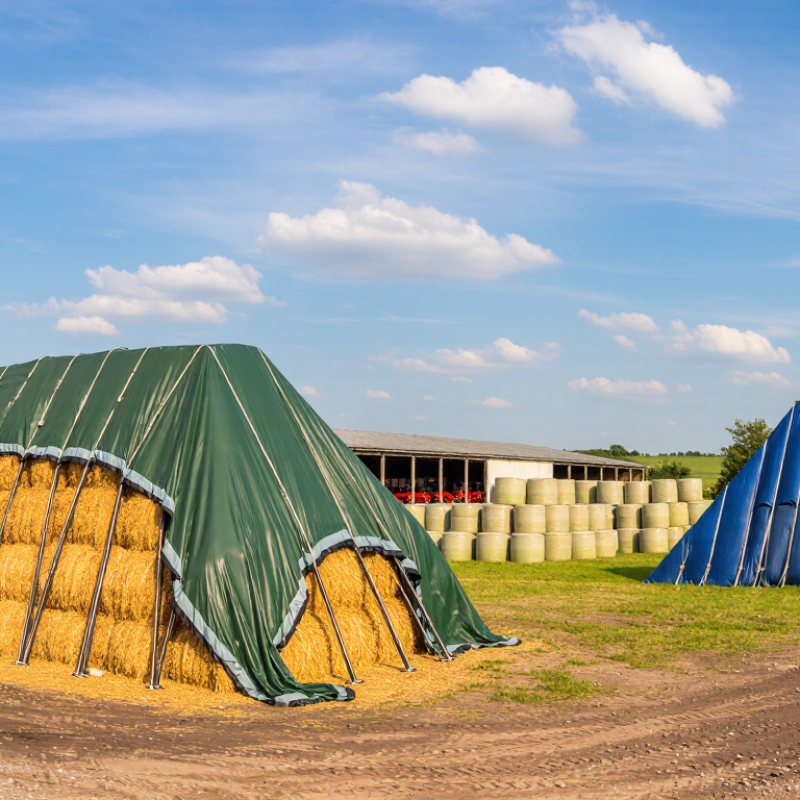
Identify Your Farm’s Tarp Requirements
Identify the job before comparing tarp materials. A cover for hay needs different features from one used over machinery or a feed area. Note what it must protect, how long it will stay in place, and whether it needs to be moved often. Measure the load, not just the ground beneath it. Leave enough extra fabric to cover the sides and secure the edges.
Weather matters. Strong sun can weaken some fabrics over time, while standing water may strain a poorly supported tarp. For windy fields, check for reinforced edges and evenly spaced grommets, then plan how to anchor them safely. Near sharp equipment, a more abrasion-resistant material may be worth the added weight. Keep ventilation in mind when covering crops or other items that could trap moisture. A waterproof cover is not always the best cover.
Consider daily handling, too. A heavy tarp can be awkward to fold alone, even if it lasts longer. Check the stated dimensions and fabric weight, and compare them with your storage space and lifting routine. Small details count. I would also allow for imperfect measurements: a few extra inches may help, but too much loose fabric can flap in gusts. Record the tarp’s actual use after a season; that practical note can guide your next choice.
Compare Tarp Materials and Construction
How to Choose the Best Farm Tarps for Your Needs?
Compare Tarp Materials and Construction
The right farm tarp depends on what it covers and how long it stays outdoors. Woven polyethylene is light, affordable, and commonly laminated for water resistance. It suits temporary covers for equipment, lumber, or bagged supplies. Check the weave and thickness, not just the product label.
A tarp that feels flimsy between your fingers may tear when wind pulls against its corners. Feel the difference. Reinforced hems and closely spaced grommets help spread that strain. Sparse tie points can leave broad sections flapping in a gust.
Canvas is heavier and allows more airflow, which can help reduce trapped moisture around certain stored items. However, untreated canvas can absorb rain, so confirm whether it has a water-resistant treatment.
PVC-coated fabric is usually tougher and more waterproof, but its weight can make frequent handling awkward. Not always. For hay or other moisture-sensitive crops, follow established storage guidance rather than assuming any tarp will prevent spoilage.
Inspect seams, edge stitching, and grommet backing before buying. A strong fabric with weak construction can still fail.
It is tempting to choose the thickest option, but excess weight may slow daily work and strain supports. Match material, reinforcement, and handling needs to the actual job.
Choose the Right Size, Weight, and Coverage
A good farm tarp should cover the load, not merely match its length. Measure the widest point, then allow enough extra material to drape over the sides and secure beneath or around the load. For machinery, check protruding mirrors, sharp corners, and tie-down locations. For hay or stored crops, avoid trapping moisture against the material; a damp underside can cause trouble. Fit matters.
Weight should match the job. A light tarp is easier to handle over a short-term pile, while a heavier, UV-stabilized woven tarp is better suited to repeated outdoor use and abrasion. Check the stated fabric weight, reinforced hems, and grommet spacing—not just thickness. The FAO’s 2019 State of Food and Agriculture estimated that 14% of the world’s food is lost between post-harvest and retail stages. A well-fitted cover cannot prevent every loss, but keeping rain and dirt off stored produce is a sensible part of careful handling.
Tips: Measure twice, including the load’s height. Add generous overlap at the edges, then test the tie-downs on a calm day. I’d rather have a little extra fabric than discover the corners are exposed after the wind picks up.
How to Choose the Best Farm Tarps for Your Needs? - Choose the Right Size, Weight, and Coverage | Nominal Tarp Size | Approximate Area | Approximate Tarp Weight* | Typical Farm Coverage | Suggested Weight and Material | Selection Notes |
| 10 × 12 ft | 120 sq ft
11.1 m² | About 4.4 lb
2.0 kg | Small equipment, feed bins, or a compact woodpile | Light-duty woven polyethylene, approximately 100–150 g/m² | Best for short-term, lighter-duty covering in relatively sheltered locations. |
| 12 × 16 ft | 192 sq ft
17.8 m² | About 7.1 lb
3.2 kg | Small machinery, a garden work area, or several stacked supplies | Light- to medium-duty polyethylene, approximately 120–180 g/m² | Allow extra material for tie-downs and for covering the sides of the load. |
| 16 × 20 ft | 320 sq ft
29.7 m² | About 11.8 lb
5.4 kg | Compact tractor attachments, a larger woodpile, or stored supplies | Medium-duty woven polyethylene, approximately 150–200 g/m² | A practical general-purpose size for seasonal outdoor storage. |
| 20 × 30 ft | 600 sq ft
55.7 m² | About 22.1 lb
10.0 kg | Farm implements, hay or straw stacks, or a broad work area | Medium- to heavy-duty polyethylene, approximately 180–250 g/m² | Choose reinforced edges and secure tie-down points where wind exposure is likely. |
| 30 × 40 ft | 1,200 sq ft
111.5 m² | About 44.2 lb
20.1 kg | Large equipment, substantial material piles, or temporary site coverage | Heavy-duty polyethylene, approximately 200–300 g/m² | Plan for multiple people to position and secure the tarp safely. |
| 40 × 60 ft | 2,400 sq ft
223.0 m² | About 88.5 lb
40.1 kg | Large storage areas, multiple equipment items, or broad temporary coverage | Heavy-duty reinforced polyethylene, approximately 200–300 g/m² | Use well-spaced supports and secure the perimeter; large tarps can catch strong winds. |
| Choosing the right tarp: Measure the area to be covered, including the sides of the load, and leave additional material for anchoring. Tarp sizes are nominal and finished dimensions can vary. Weight estimates above assume a 180 g/m² tarp and exclude ropes, fasteners, and packaging; actual weight depends on material, coating, and construction. For ventilation, breathable canvas may suit some uses, while coated or woven polyethylene is commonly chosen for water-resistant coverage. |
Check Durability, Maintenance, and Overall Value
How to Choose the Best Farm Tarps for Your Needs?
Durability, maintenance, and value matter more than a low price alone. Check the tarp’s fabric weight, reinforced edges, seam quality, and UV protection. Match these features to the job: a cover stretched over hay faces different wear than one laid over equipment. Ask for test results or a clear warranty, and inspect a sample for loose stitching. Small details show up fast in wind.
Maintenance affects the real cost. Brush off dirt, dry the tarp before storage, and repair small tears with compatible patches. Keep it away from sharp corners, which can turn a pinhole into a long split. The FAO’s 2021 Assessment of Agricultural Plastics and their Sustainability estimates that 12.5 million tonnes of plastic products are used in plant and animal production worldwide each year. That figure covers many products, not tarps alone, but it underscores why choosing a repairable cover matters. I would still compare actual service life; a promise on a label is not a field test.
Tips: Calculate cost per season, not just cost per tarp. Check tie-down points after the first windy day, and store the cover dry and shaded. Replace worn ropes early. It is an easy step to miss. A tarp that needs frequent replacement may not be the bargain it seemed.