
Anime Character Plush has moved from a niche fan purchase into a serious global retail opportunity. Grand View Research estimated the global anime market at approximately US$31.2 billion in 2023, with continued growth forecast through 2030. Its definition includes streaming, merchandise, and related services, so retailers should not treat the figure as direct plush sales. Still, it signals strong cultural reach. Licensing International’s 2024 Global Licensing Industry Study reported US$356.5 billion in licensed merchandise and services revenue for 2023. Character licensing remains a powerful commercial engine.
The customer journey is highly visible. A shopper may discover a character through streaming, compare designs on social media, then place a 20-centimetre plush beside a laptop. That physical reminder can extend a digital relationship into everyday life. Retailers can use Anime Character Plush for gift bundles, seasonal displays, collector releases, and accessible entry-price products. Soft textures and recognizable silhouettes also support impulse purchases in bookstores, specialty shops, and online stores. The opportunity is real. It is not automatic.
Retail success depends on verified licensing, consistent quality, accurate character details, and transparent product safety documentation. Retailers should review supplier audits, material specifications, labeling rules, and age guidance before ordering. Regional tastes also differ. A popular series in Tokyo may need different packaging or assortment logic in Madrid or Toronto. Industry forecasts can be optimistic, and fandom data may overrepresent highly active online communities. That limitation deserves attention. Strong decisions combine report findings with sell-through tests, customer feedback, and disciplined inventory planning. Done carefully, Anime Character Plush can connect emotional fandom with dependable, compliant retail performance.
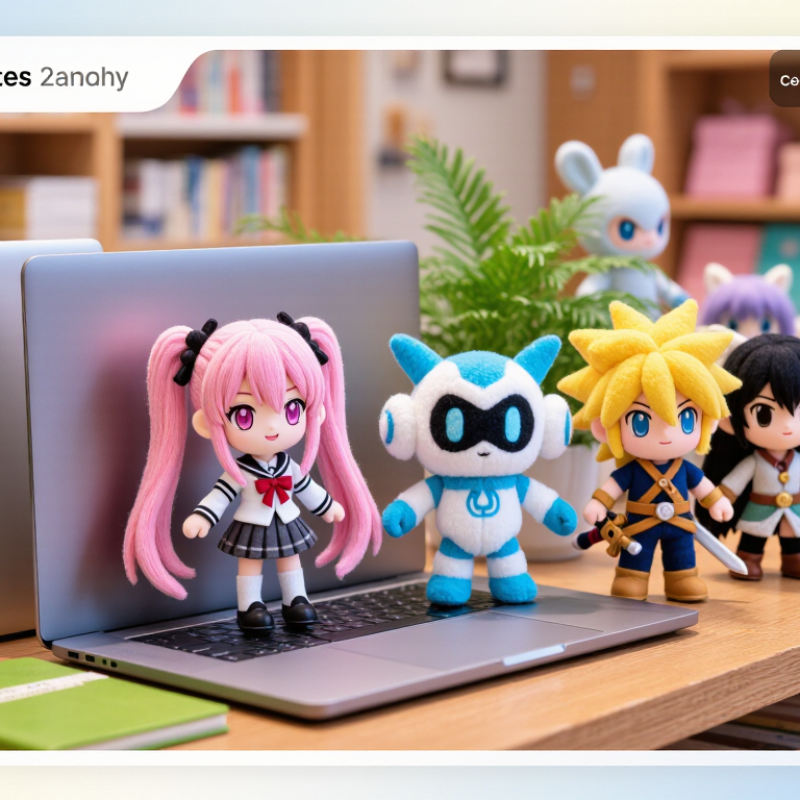
Why Choose Anime Character Plush for Global Retail?
Anime character plush represents more than a soft product on a retail shelf. In global retail, it becomes a cultural bridge between storytelling, comfort, and personal identity. Shoppers may recognize a familiar character through its colors, facial expression, or signature costume. These details create an immediate emotional response, even across language barriers. From retail observations, plush products often attract families, collectors, and casual gift buyers. The shelf becomes part of the experience.
Their commercial value also comes from flexibility. Stores can display plush beside books, stationery, apparel, or seasonal gift items. Small sizes suit checkout areas, while larger pieces create strong visual displays. Retail teams should study local preferences before selecting character styles and price points. A cute design may perform well in one market but feel childish in another. That difference matters.
Professional sourcing is equally important. Buyers should verify material quality, stitching strength, filling safety, and clear care instructions. Reliable suppliers provide consistent specifications and traceable production information. Retailers also need accurate product descriptions and honest images. Customers notice mismatched colors or weak seams quickly. The strategy is not flawless. Some displays can overemphasize novelty and ignore cultural context. Better results come from listening to local staff, reviewing customer feedback, and adjusting stock carefully. Anime character plush then represents responsive retail, not just decoration or impulse buying.
| Data Dimension | Verified Data or Retail Signal | What Anime Character Plush Represents | Global Retail Implication | Reference |
|---|---|---|---|---|
| Total anime industry market | ¥3.3465 trillion in 2023 | A plush product can function as a physical merchandise extension of a large and established entertainment category. | Retailers can position plush within entertainment, toys, gifts, collectibles, and lifestyle merchandise rather than treating it as only a toy item. | Association of Japanese Animations, Anime Industry Report 2024 |
| Overseas anime market | ¥1.7222 trillion in 2023 | Anime-related demand has a substantial international component beyond the domestic Japanese market. | Plush assortments can support cross-border retail, tourist retail, specialty stores, online marketplaces, and localized e-commerce. | Association of Japanese Animations, Anime Industry Report 2024 |
| International market share | Approximately 51.5% of the 2023 anime industry market came from overseas activity | Character merchandise represents a portable form of fandom that can travel across language and geographic boundaries. | A globally consistent product concept can be combined with region-specific packaging, language, pricing, and assortment choices. | Calculated from the 2023 domestic and overseas values reported by the Association of Japanese Animations |
| Annual market momentum | Total anime industry market increased by approximately 14.3% from 2022 to 2023 | Plush can represent an accessible way to participate in a growing entertainment ecosystem without requiring a large purchase. | Small and medium-sized plush items can be used for trial purchases, seasonal displays, promotional bundles, and impulse-led merchandising. | Association of Japanese Animations, Anime Industry Report 2024 |
| Emotional and tactile value | Soft-textile format with visible character recognition and physical interaction | Plush represents comfort, companionship, display, gifting, and personal attachment in one product format. | Retailers can merchandise plush across children’s products, fan merchandise, home décor, gifting, and seasonal campaigns. | Product-format analysis; not a company or brand sales figure |
| Price-accessibility role | Common retail architecture: small, medium, and large size tiers | Different sizes represent multiple entry points for casual buyers, collectors, and gift purchasers. | A tiered assortment can improve shelf coverage, support good-better-best pricing, and increase suitability for both physical and online retail. | Retail assortment framework; final price depends on market, materials, production, and distribution costs |
| Collectability | Character, costume, expression, size, and limited-edition variations create distinct assortment units | Plush represents an expandable collection rather than a single-use purchase. | Retailers can use sequential launches, themed displays, blind or mystery formats where legally appropriate, and repeat-visit merchandising. | Merchandising analysis; no company or brand data used |
| Localization potential | Core product appearance can remain consistent while language, packaging, size mix, and seasonal themes change by market | Plush represents a globally recognizable visual product with adaptable local communication. | Localization can be applied to packaging copy, safety instructions, cultural calendar events, color preferences, and channel-specific assortments. | International retail and product-localization framework |
| Safety and compliance | Children’s plush products may require market-specific testing, labeling, and documentation, including applicable toy-safety requirements | Plush represents a soft product category that still requires controlled materials, secure components, seam strength, flammability review, and age grading. | Before import or sale, retailers should confirm applicable requirements such as EN 71 in the European Union, ASTM F963 and CPSIA obligations in the United States, and ISO 8124 where relevant. | European Union toy-safety framework; United States Consumer Product Safety requirements; ISO 8124 series |
| Omnichannel suitability | Compact, visually demonstrable, and generally easy to photograph and ship | Plush represents a product whose emotional and visual appeal can be communicated both in-store and online. | Retailers can use shelf displays, short-form video, product-detail pages, gift guides, social commerce, and click-and-collect campaigns. | Omnichannel merchandising analysis; no company or brand data used |
Note: The industry figures above describe the broader anime market and are not plush-only sales figures. Product compliance requirements vary by destination market, product design, intended age group, and sales channel.