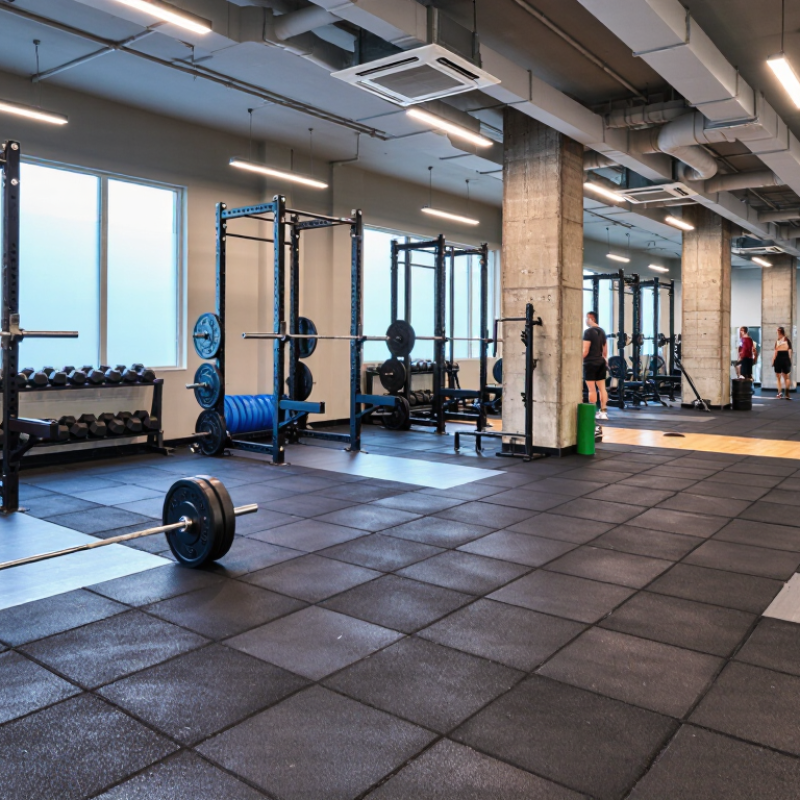
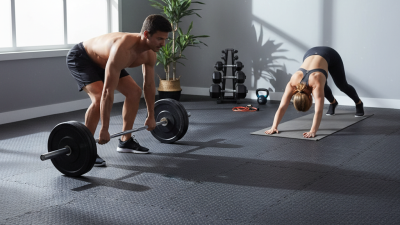
Choosing the right surface can shape every workout, from a quiet stretch to a heavy barbell drop. Gym flooring tiles offer a practical foundation for fitness facilities that need safety, durability, and flexible maintenance. Their modular design allows damaged sections to be replaced without removing an entire floor. That detail matters when equipment moves daily and training zones change over time.
In commercial gyms, rubber tiles can help reduce impact from weights and protect concrete subfloors. They also provide traction beneath running shoes, lifting footwear, and exercise mats. Experienced facility managers often value the installation process as much as the finished surface. Proper subfloor preparation, accurate measurements, and secure seams can prevent raised edges and unwanted movement. The right thickness still depends on use. A strength area may need more impact protection than a stretching room.
Gym flooring tiles are not a perfect answer for every facility. They can be heavy. Some products may have a noticeable rubber odor after installation. Poor cleaning habits can also shorten their service life. These limitations deserve attention before purchase. A reliable supplier should explain material composition, maintenance requirements, wear ratings, and suitable applications. Product testing and manufacturer guidance can support a more informed decision.
Think beyond appearance. Imagine a busy training floor at 6 p.m., with plates landing, members changing direction, and staff cleaning between sessions. The surface must perform under pressure. When selected carefully and installed professionally, gym flooring tiles can support safer movement, easier repairs, and a more dependable fitness environment. Still, every facility should review its budget, training style, ventilation, and long-term maintenance plan before committing.
Gym flooring tiles are modular surface units, usually made from rubber, foam, or dense PVC. They connect through interlocking edges or adhesive, creating a stable training floor. Each tile works like a small impact-management system. It spreads force across the surface instead of sending every load directly into the subfloor.
Thickness and density matter. Heavy rubber tiles can handle dropped weights, sled work, and repeated foot traffic. Softer tiles improve comfort during stretching, mobility drills, and floor exercises.
242.3 million
Americans joined at least one fitness or sports activity in 2023.
A 2024 Sports & Fitness Industry Association report found that 242.3 million Americans joined at least one fitness or sports activity in 2023. That variety creates different flooring demands inside one facility.
It is not simply about choosing the thickest tile. Too much softness can reduce stability during squats or lateral movement. Too little cushioning can increase noise and surface stress. ASTM flooring standards provide testing methods for impact absorption, slip resistance, and performance consistency, but real installation conditions still matter. The subfloor must be level, clean, and dry. Small gaps can collect dust and moisture. They become noticeable later.
According to Grand View Research, the global sports flooring market is projected to grow steadily through the decade, reflecting stronger demand for safer, adaptable training spaces.
Experienced installers also check temperature, ventilation, and tile expansion before fitting. Some decisions fail in practice. A sample tile may feel excellent, yet perform poorly under thousands of daily steps.
Why Choose Gym Flooring Tiles for Your Fitness Facility?
Key Benefits of Using Tiles in Fitness Facilities
Gym flooring tiles create a stable base for strength training, cardio areas, and group classes. Their dense rubber or resilient composite structure helps absorb impact from dropped weights. It also reduces vibration beneath treadmills and rowing machines. Staff can install tiles over a prepared, level subfloor without closing the entire facility.
Safety depends on more than thickness. Choose tiles with tested slip resistance, low odor, and suitable shock absorption. Textured surfaces can improve grip around changing areas and water stations. However, aggressive textures may feel uncomfortable during floor exercises. This detail is easy to overlook. A small sample test can reveal more than a product description.
Tiles also simplify maintenance. If one section becomes damaged, staff can replace that area instead of removing the whole floor. Dark colors may hide marks, but they can make dust less visible during inspections. Regular sweeping, damp cleaning, and prompt removal of sweat help protect the surface. Seams still need attention, especially near heavy lifting platforms. Good installation limits movement, yet no tile system solves every subfloor problem. Facility managers should check moisture, levelness, and ventilation before installation. Clear maintenance records support consistent care and help identify wear patterns over time.
Gym flooring tiles support safety by creating a more stable surface beneath every movement. Their textured finish can improve traction during lunges, pivots, and sled work. That matters because the U.S. Consumer Product Safety Commission recorded more than 400,000 emergency-department-treated exercise-equipment injuries in 2021. Flooring cannot prevent every injury. It can, however, reduce avoidable slipping and improve confidence during training.
Comfort also affects how people use a facility. Dense rubber or foam-backed tiles cushion repeated foot strikes and reduce fatigue during long sessions. The World Health Organization recommends 150–300 minutes of moderate activity weekly for adults. A harsh floor may discourage consistent participation. A resilient surface feels better underfoot, especially near treadmills, racks, and lifting platforms. Still, softer is not always better. Excessive cushioning can reduce balance and stability.
Tiles also protect equipment and simplify maintenance. Their impact resistance helps absorb dropped dumbbells and spreads pressure from racks across a wider area. Interlocking sections can be replaced individually after damage, which is more practical than removing an entire floor. OSHA’s walking-working surface standard, 29 CFR 1910.22, requires floors to remain clean, orderly, and sanitary. That requires routine inspection, not wishful thinking. Dust, moisture, and loose edges can quietly create hazards. In real facilities, installation details often matter as much as material choice.
Typical commercial rubber tile thickness varies by training zone. Thicker tiles are commonly specified for free-weight and functional-training areas because they help absorb impact, improve underfoot comfort, and reduce stress on subfloors and equipment.
The ranges shown are typical commercial specification values in millimetres; final selection should consider equipment weight, drop height, subfloor construction, local standards, and manufacturer testing.
Gym flooring tiles can make a fitness facility safer, quieter, and easier to maintain. The right choice depends on material, thickness, and surface design. These details affect comfort, stability, cleaning, and long-term costs.
Recycled rubber tiles suit free-weight areas because they absorb impact and reduce noise. They also resist dents from dropped dumbbells. For stretching zones, softer rubber or foam-backed tiles may feel more comfortable.
Thickness matters greatly. A 6–8 mm tile can work for light training, while 15–30 mm tiles offer better protection under heavy equipment. Thicker flooring is not always better. It may create awkward door gaps and require stronger edge transitions.
Surface design deserves equal attention. A fine, textured finish can improve grip when shoes or hands are damp. However, deep patterns often collect chalk, dust, and cleaning residue. Smooth tiles clean faster, but they may feel less secure during dynamic movements.
Interlocking edges can simplify replacement after damage. Yet, poor installation may leave visible seams or slight movement underfoot.
Test samples on site. Walk, jump, and place equipment on them. Listen for vibration. Check how the surface reacts to daily cleaning.
I have seen attractive flooring perform poorly because its texture trapped debris. Facility conditions are rarely perfect. Sunlight, humidity, heavy traffic, and rushed maintenance can change the result. A practical specification should allow room for those realities.
Gym flooring tiles offer practical control in busy fitness facilities. Each tile can be carried, measured, and fitted without specialized equipment. This helps teams manage installation around existing equipment and operating hours. Interlocking edges reduce movement, while dense rubber absorbs impact from dropped weights and repeated foot traffic. A level subfloor remains essential. Tiles cannot hide serious cracks, moisture, or uneven concrete. In my experience, rushed preparation creates more problems than difficult installation.
Maintenance begins with a simple routine. Sweep loose grit daily, because small stones can wear the surface under heavy machines. Use a mild cleaner and limited water. Excess moisture may enter seams or weaken the subfloor. Inspect corners, edges, and high-use areas each week. Look for curling, gaps, stains, or unusual softness. Some damage appears slowly. That makes inspections easy to postpone, unfortunately. Keep written maintenance records, including cleaning dates and damaged locations. These records support consistent decisions and improve facility safety.
Tips: Order a few extra tiles during installation. Color and texture can vary between production batches. Store replacements flat, clean, and away from direct sunlight. When replacing a tile, remove nearby equipment carefully and check the subfloor first. Match the original thickness and surface profile. A quick patch may look acceptable, but it can create a trip edge later. Do not rely only on appearance. Ask qualified flooring professionals when adhesive failure, persistent odor, or widespread movement appears. Personally, I would rather replace one questionable tile than ignore a small warning.
| Consideration | Typical Data or Requirement | Why It Matters | Recommended Practice | Replacement Indicator |
|---|---|---|---|---|
| Tile Format | Common modular sizes include 50 × 50 cm and 100 × 100 cm. | Smaller tiles are easier to handle and replace individually, while larger tiles reduce the number of seams. | Choose a tile size that matches the room layout and allows damaged sections to be removed without disturbing adjacent flooring. | Replace only the affected tile when damage is localized and the surrounding tiles remain stable. |
| Material Selection | Rubber tiles are commonly selected for weight areas, functional training zones, and high-traffic spaces. Foam or vinyl tiles may suit lighter-use areas. | Material density, resilience, slip resistance, and shock absorption influence safety, noise, and service life. | Use higher-density rubber in areas exposed to free weights, sleds, and repeated impact. | Replace flooring when it becomes brittle, permanently deformed, excessively slippery, or unable to recover from compression. |
| Recommended Thickness | Approximately 8–15 mm for general training; 15–30 mm for free-weight and impact areas. | Thicker flooring generally provides greater impact protection, sound reduction, and subfloor protection. | Specify thickness according to equipment load, dropping frequency, traffic level, and the condition of the subfloor. | Upgrade to a thicker system if impact marks, excessive vibration, or subfloor damage continues after installation. |
| Subfloor Preparation | The base should be clean, dry, structurally sound, and reasonably level before installation. | Dust, moisture, cracks, and uneven areas can cause rocking tiles, open seams, odors, or premature wear. | Remove debris, repair significant cracks, verify moisture conditions, and allow recently installed concrete to cure according to project requirements. | Lift and replace tiles only after the underlying moisture or structural problem has been corrected. |
| Installation Method | Loose-lay installation is common for modular tiles; adhesive or edge restraints may be used where movement is likely. | Loose-lay systems simplify future repairs, while fixed systems can reduce shifting in demanding applications. | Install from a straight reference line, maintain tight seams, and leave appropriate perimeter clearance where required by the flooring system. | Reinstall or replace tiles that repeatedly migrate, curl, separate, or develop unsafe gaps. |
| Acclimatization | Allow tiles to adjust to indoor temperature and humidity before installation; the required period depends on the material and manufacturer instructions. | Acclimatization helps reduce dimensional changes, gapping, and installation stress. | Store tiles flat in the installation area and avoid exposing them to extreme heat, cold, or direct sunlight before fitting. | Replace tiles that remain permanently warped after they have reached stable indoor conditions. |
| Traffic Planning | High-use routes typically include entrances, equipment access paths, lifting platforms, and areas around popular machines. | Concentrated traffic can create localized wear even when the rest of the floor remains in good condition. | Use entrance mats, organize equipment placement, and rotate movable equipment where practical to distribute wear. | Replace high-traffic tiles when surface texture is visibly worn or traction is reduced. |
| Daily Cleaning | Remove loose dirt and chalk or powder residue with a vacuum, soft broom, or dust mop. | Abrasive particles can act like sandpaper and accelerate surface wear. | Clean spills promptly and avoid allowing moisture to remain beneath or between modular tiles. | Replace tiles if repeated contamination has caused persistent odor, staining, or deterioration. |
| Routine Washing | Use a neutral cleaning solution diluted according to its instructions and apply only enough moisture for effective cleaning. | Harsh solvents, excessive water, and unsuitable chemicals may damage the surface or backing. | Test cleaning products in an inconspicuous area, use non-abrasive tools, and allow the floor to dry fully before use. | Replace areas with chemical damage, peeling surfaces, or permanent discoloration that affects safety or appearance. |
| Moisture Control | Moisture should not be trapped between the tile and subfloor. | Trapped water can contribute to odor, microbial growth, adhesive failure, and subfloor damage. | Inspect beneath tiles in wet-prone areas and address plumbing leaks, condensation, and cleaning practices promptly. | Remove and replace tiles affected by persistent mold, backing breakdown, or moisture-related deformation after the source is resolved. |
| Inspection Frequency | Perform visual checks daily in busy facilities and a more detailed inspection at least monthly. | Early detection helps prevent trips, water damage, and small defects from spreading. | Check seams, corners, edges, surface wear, odor, movement, and areas beneath heavy equipment. | Schedule immediate repair when a defect creates a trip hazard, unstable equipment base, or exposed subfloor. |
| Expected Service Life | Approximately 5–15 years is a practical planning range, depending on material quality, thickness, traffic, impact, cleaning, and maintenance. | Service life is influenced more by operating conditions than by installation date alone. | Maintain records of installation, cleaning, repairs, heavy-use zones, and observed wear to support lifecycle planning. | Plan broader replacement when wear is widespread, repairs are frequent, or performance no longer meets facility needs. |
| Repairability | Modular construction allows individual damaged tiles to be removed and replaced. | Localized repairs can reduce downtime, labor, and material waste compared with replacing an entire floor. | Keep a small quantity of matching spare tiles in a clean, dry storage area for future repairs. | Replace a tile when it has deep cuts, tears, permanent compression, loose edges, or a failed interlocking connection. |
| Safety and Traction | The finished surface should remain stable, slip-resistant under expected conditions, and free from raised edges or open gaps. | Floor performance directly affects user confidence, lifting stability, and trip-risk control. | Keep the surface clean and dry, secure moving tiles, and remove damaged pieces from service until repaired. | Replace flooring when traction has materially decreased or when surface damage cannot be corrected through cleaning. |
| Noise and Vibration | Impact noise is affected by tile thickness, density, subfloor construction, equipment type, and how weights are handled. | Appropriate flooring can reduce transmitted sound and vibration but cannot eliminate noise from improper equipment use. | Combine suitable tile thickness with controlled weight placement, lifting platforms where needed, and facility operating rules. | Consider a performance upgrade if vibration remains excessive after equipment and installation issues have been addressed. |
| Replacement Decision | Replacement is justified when safety, hygiene, stability, or functional performance can no longer be maintained. | Replacing only when necessary balances operating costs with user safety and facility appearance. | Compare repair frequency, affected area, downtime, cleaning difficulty, and the cost of continued maintenance. | Replace immediately when flooring presents a trip hazard, exposes the subfloor, supports microbial growth, or becomes structurally unstable. |

Note: The figures shown are typical planning ranges for commercial fitness facilities. Final specifications should be verified against the flooring system, building conditions, equipment loads, local regulations, and the facility’s operating schedule.